
What the proposed standards actually mean
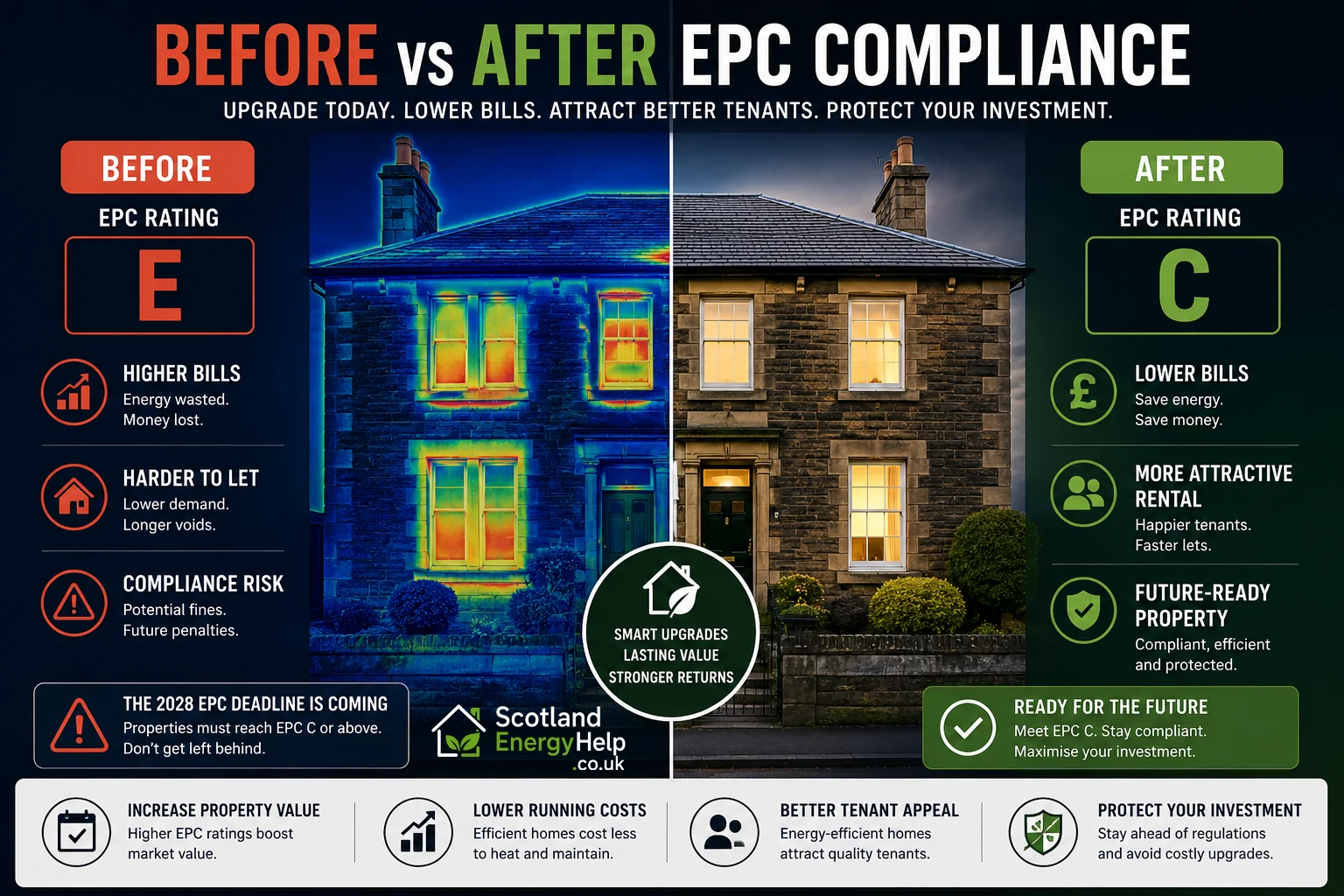
Scotland is in the process of introducing a Heat in Buildings Bill that will set minimum energy performance standards for all homes. For private landlords the proposed timeline is clear: from 2028, all new tenancy agreements must be for properties meeting the minimum standard (equivalent to new EPC band C). From 2033, all existing tenancy agreements must meet the same standard, regardless of when the tenancy started.
Enforcement is proposed to operate through Scotland's landlord registration system. Landlords who fail to meet standards could face consequences through the First-tier Tribunal for Scotland (Housing and Property Chamber).
These remain proposals and legislation has not yet been finalised. However, the direction of travel is clear, and waiting for final legislation before planning upgrades is a high-risk strategy given the lead times involved.

EPC changes from 2026
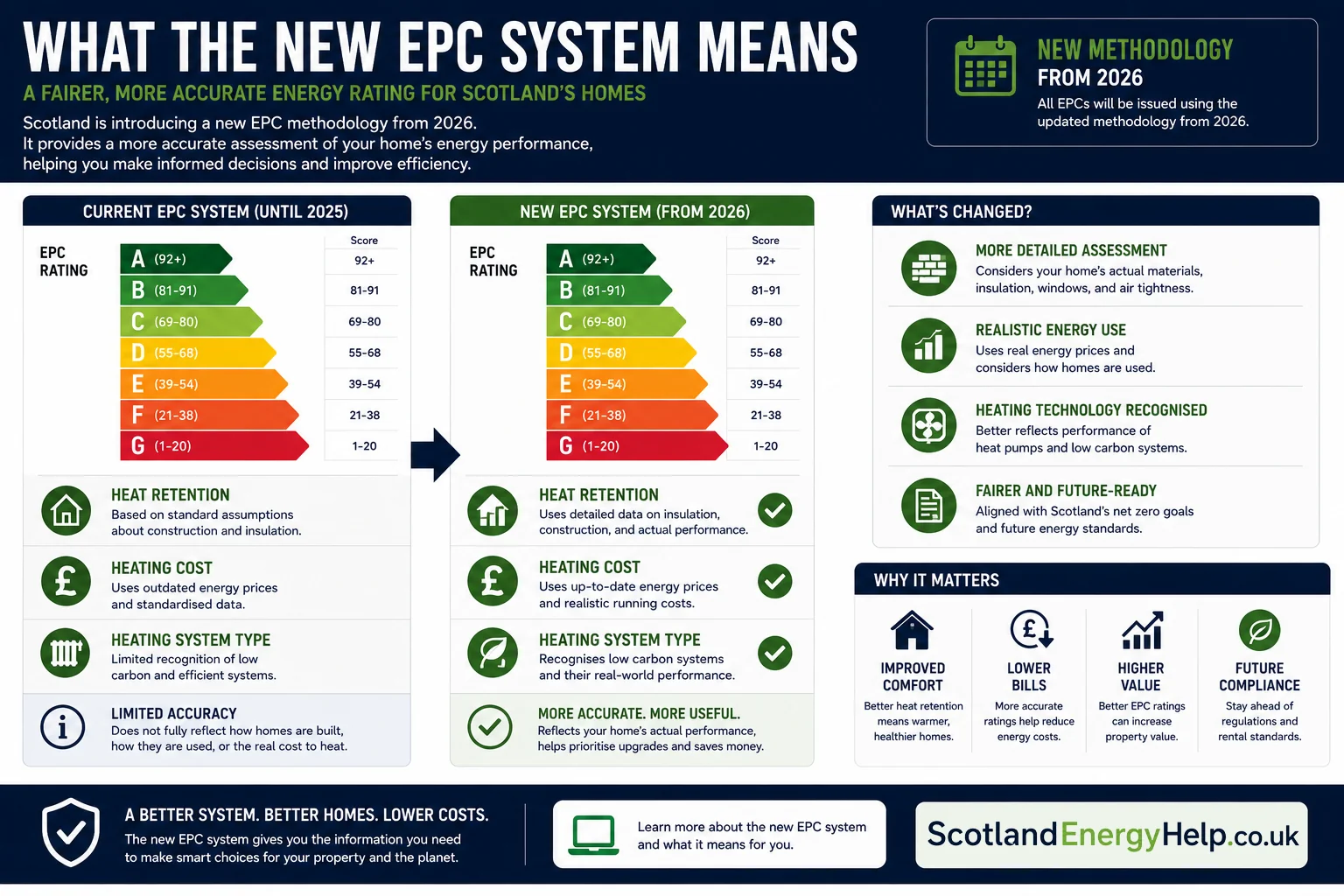
From 2026, EPC certificates in Scotland change in two significant ways. Validity reduces from 10 years to five years, meaning more frequent reassessment will be required.
New EPC ratings will also be introduced, incorporating measures of heat retention, heating cost and heating system type. Landlords with older EPCs should commission updated assessments to understand where their properties sit under the new methodology.
The HES Private Rented Sector Landlord Loan
The main Home Energy Scotland grant — up to £7,500 per measure — is available to owner-occupiers only. As a landlord, you cannot access it for properties you rent out. However, there is significant support available through a dedicated landlord loan.
Up to £15,000 per property for energy efficiency measures including insulation, secondary glazing and storage heaters. Up to £38,500 per property for renewable heating systems including heat pumps. Maximum of £100,000 interest-free for upgrades across up to five properties. For portfolios above five properties, loans up to £250,000 are available at 3.5% APR.
All works must use MCS-certified or TrustMark-registered installers. The loan is interest-free for most landlords — the cost of borrowing for these improvements is zero.

Funding via tenants — Warmer Homes and ECO4
If your tenant qualifies for Warmer Homes Scotland — through receipt of qualifying benefits, age 75 or over, or certain medical circumstances — works can be arranged through HES at no cost to either the landlord or the tenant. The landlord benefits from a better EPC rating at no direct cost.
If your tenant receives means-tested benefits, ECO4 may fund insulation or heating upgrades through their energy supplier. Encouraging eligible tenants to contact their energy supplier about ECO4 is worth doing.

The financial case for acting now
Consider a landlord with a portfolio of five properties, each requiring £10,000 of works to reach EPC band C. Total works cost: £50,000. Under the HES landlord loan: borrow £50,000 interest-free, repay over the agreed term with no interest charges, properties meet the 2028 standard before the deadline, no risk of enforcement action, and improved EPC may support higher rental valuations.
Compare this to waiting until 2027, when installer demand will be significantly higher, lead times longer, and the pressure to complete works will reduce negotiating leverage on price.
Acting now means lower costs, better installer choice, no deadline pressure, and full use of the interest-free loan.

What upgrades make the most difference
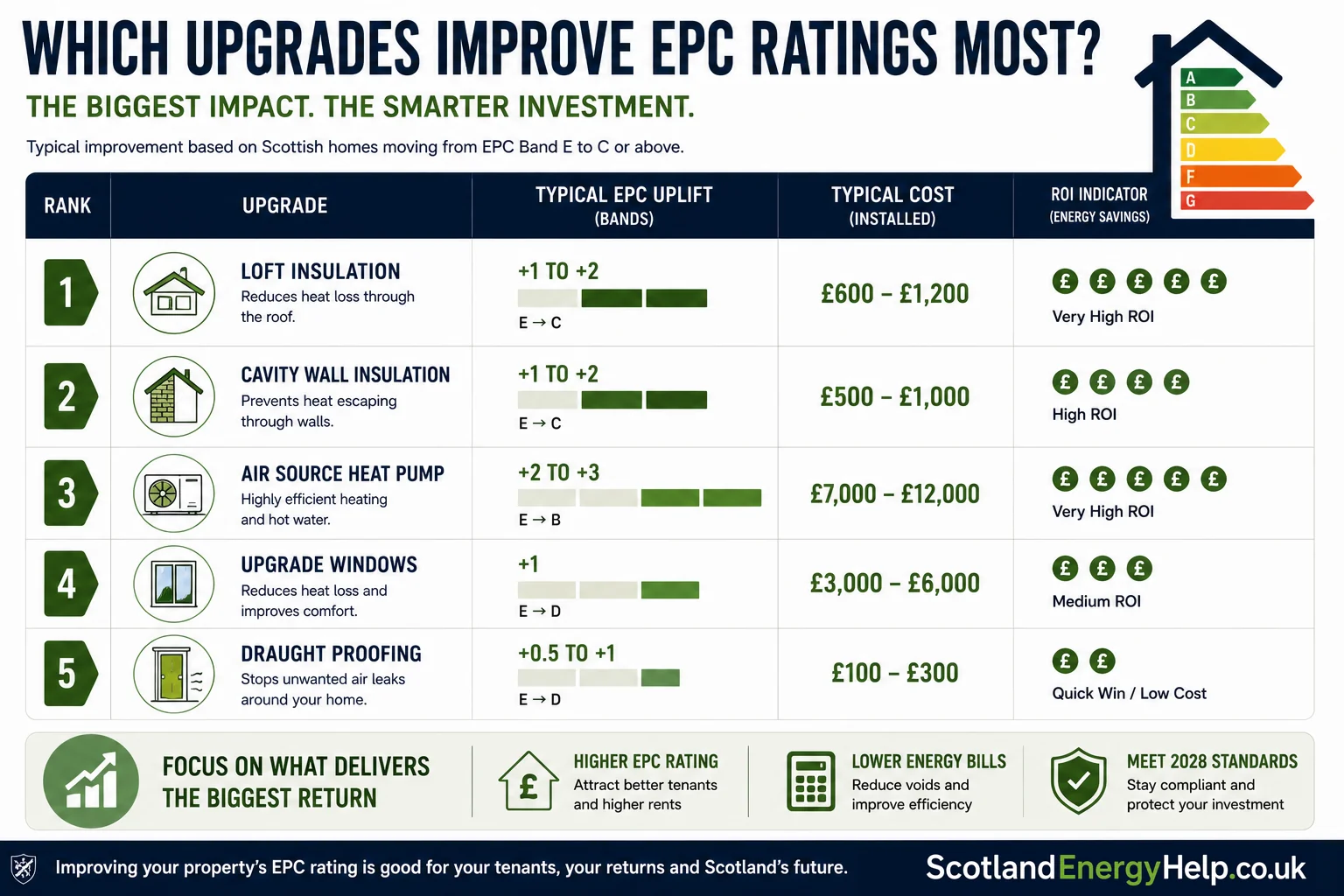
Loft insulation — if not already present or if below current standards, this is almost always the first recommendation. Low cost relative to impact.
Cavity wall insulation — for properties built mid-century with unfilled cavities, this is one of the highest-impact, lowest-cost measures. Typically £2,000 to £3,000.
Heating system upgrade — replacing an aging gas boiler or storage heaters with a modern heat pump typically provides the largest single improvement in EPC rating.
Windows — upgrading single glazing to double or double to triple improves heat retention ratings. Less impactful than insulation in most cases but worth considering in older properties.
Commission an up-to-date EPC assessment and ask the assessor specifically what measures would move the property to band C and at what estimated cost.
Section 24 and tax considerations
Under Section 24, the tax relief available on mortgage interest for higher-rate taxpaying landlords has been restricted since 2017. This is not directly related to retrofit, but it is relevant context for landlords assessing the overall financial picture of their property investments.
The costs of genuine improvements to a rental property — not repairs, but improvements that add value or extend the property's life — are generally either deductible against rental income or capitalised for capital gains purposes. Energy efficiency works typically fall into this category. Always confirm the tax treatment with a qualified accountant before proceeding.
Landlord action checklist
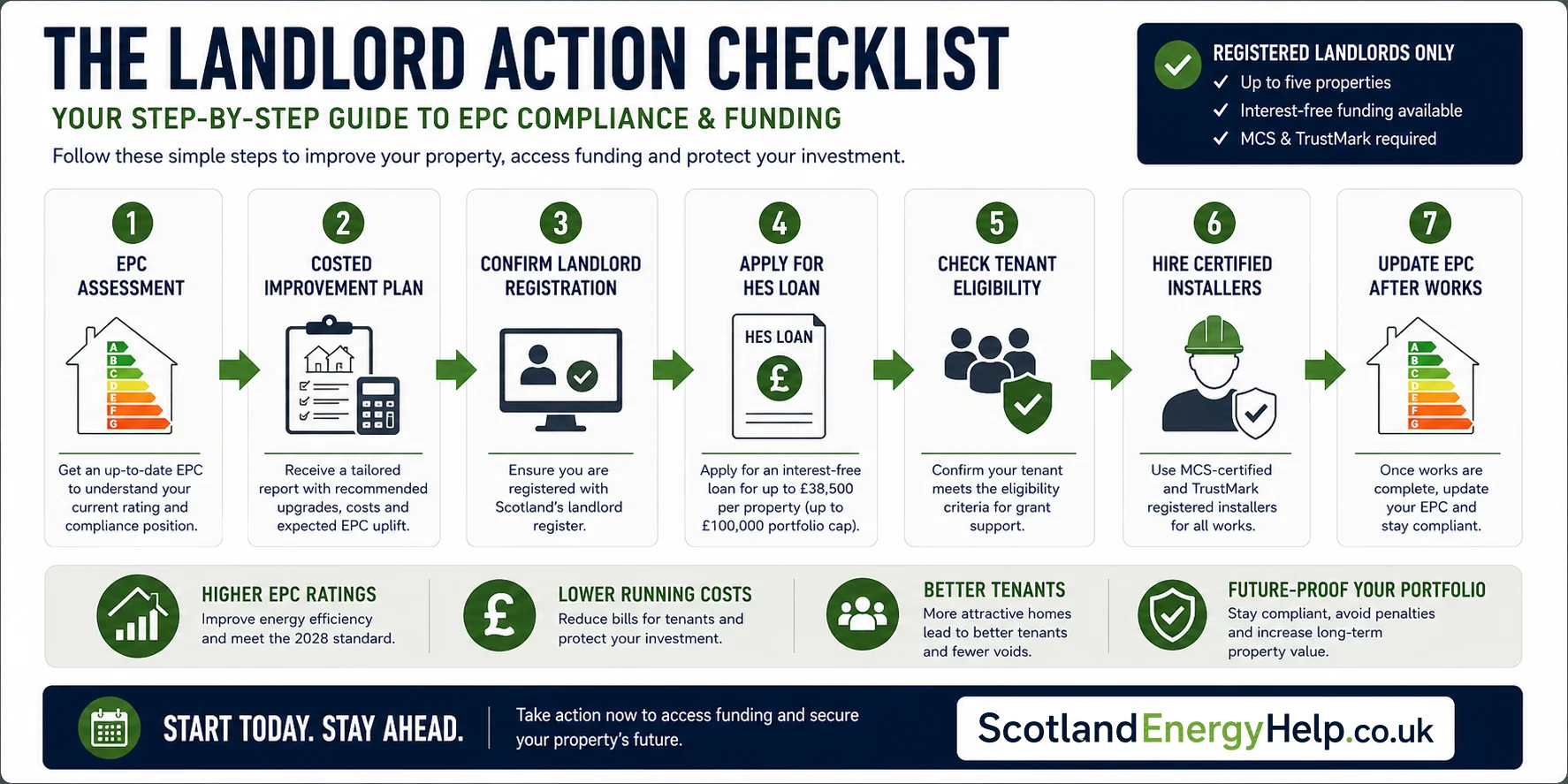
Step 1 — Commission an up-to-date EPC for every rental property. If any certificate is more than five years old or pre-dates the 2026 methodology changes, commission a fresh assessment.
Step 2 — For any property below band C, ask the assessor for a costed improvement plan.
Step 3 — Confirm your landlord registration is current. The HES landlord loan requires registered landlord status.
Step 4 — Apply to HES for the landlord loan. Interest-free borrowing makes this the most cost-effective route for most landlords.
Step 5 — Check whether any tenants qualify for Warmer Homes or ECO4. If so, coordinate with HES to access works at no direct cost.
Step 6 — Engage MCS-certified and TrustMark-registered installers for quotes. Do not use installers without current certification evidence.
Step 7 — Commission updated EPC assessments after works are complete to confirm the new rating.
Frequently asked questions
What if my property is listed?+
Listed buildings have specific exemptions. You will need an EPC exemption certificate, but should still upgrade where possible.
Can I access the £7,500 HES grant as a landlord?+
No — the main HES cashback grant is restricted to owner-occupiers. Landlords access support via the dedicated interest-free PRS landlord loan (up to £100,000 across five properties) instead.
What happens if I miss the 2028 deadline?+
Enforcement is proposed through the landlord registration system and First-tier Tribunal. In practice, you may not be able to lawfully let the property to new tenants until it meets band C.
How long does the landlord loan take to approve?+
Typically 6–10 weeks from application to offer. Apply well before you need the funds — installer lead times are also expected to lengthen as the deadline approaches.
Get this as a branded PDF
Save it, print it, share it with your contractor.