
The honest starting point
Window upgrades are rarely the most cost-effective first measure — but for older Scottish homes with single glazing, they make a meaningful difference to warmth, draught levels and running costs.
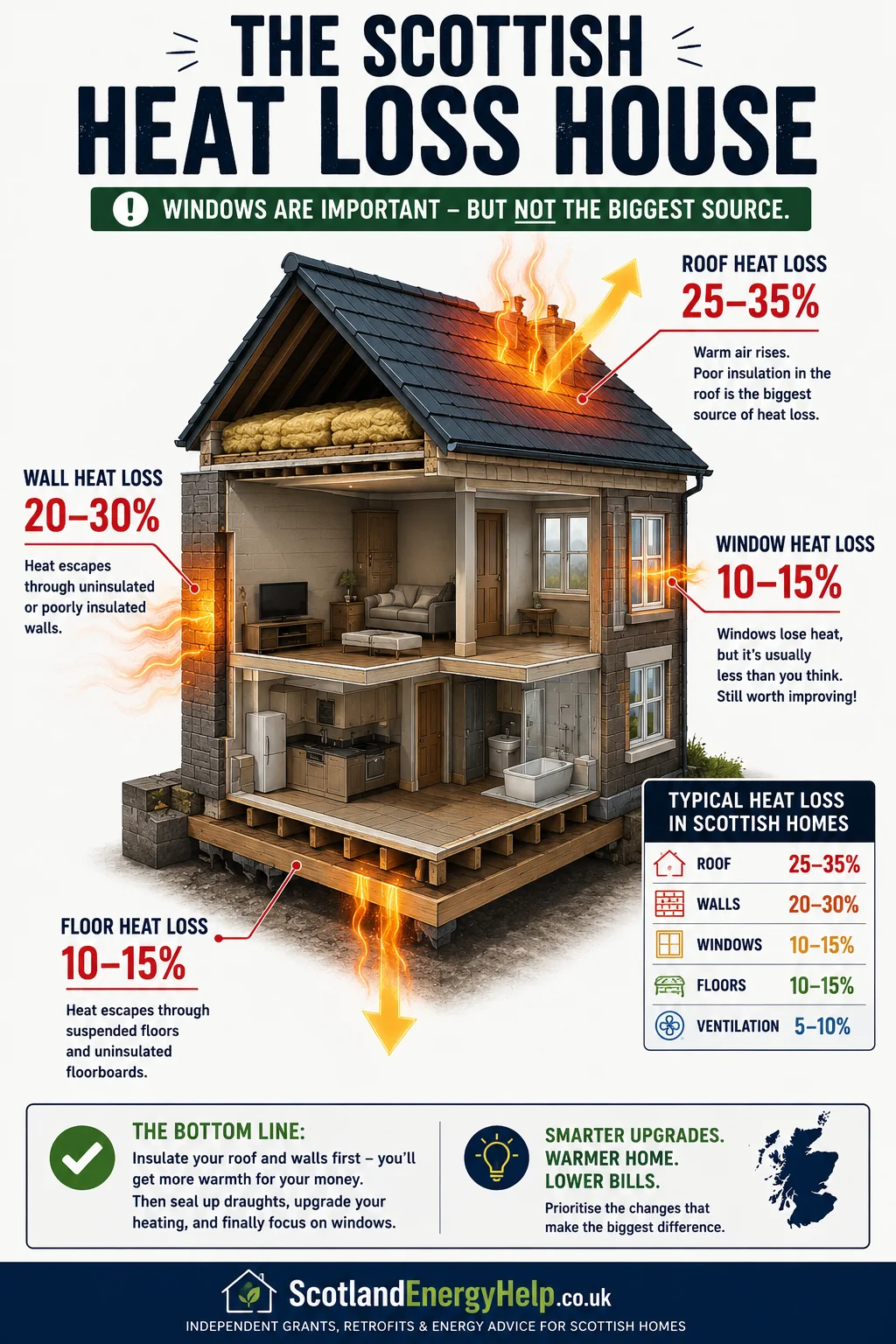
Most energy advice sites push double glazing hard because it is easy to sell. We will be direct: for most Scottish homes, loft insulation, wall insulation and heating upgrades deliver better value per pound spent than window replacement. Windows matter — but they are rarely the right starting point.
When window upgrades are a priority
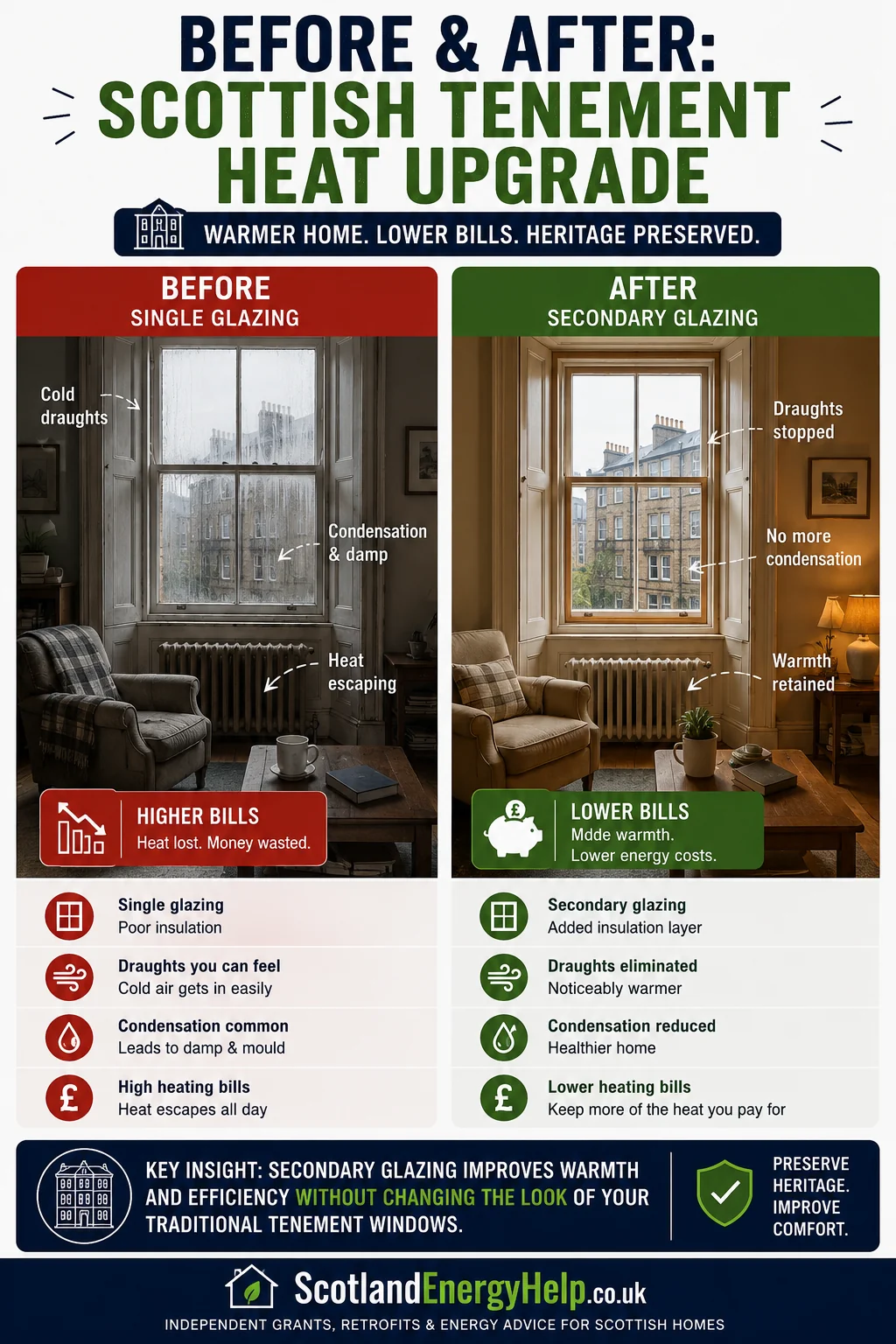
Single glazing still in place — common in older tenements, pre-1920 sandstone homes and some rural properties. The performance gap from single to double is far larger than from double to triple. This is a high priority.
Listed buildings and conservation areas where external wall insulation is restricted. Secondary glazing preserves the original window completely, usually requires no planning permission, and dramatically improves thermal performance.
Existing double glazing over 20 years old, especially with misting between panes — the seals have failed and the units perform little better than single glazing.
EPC improvement required to reach band C when other measures are already in place.
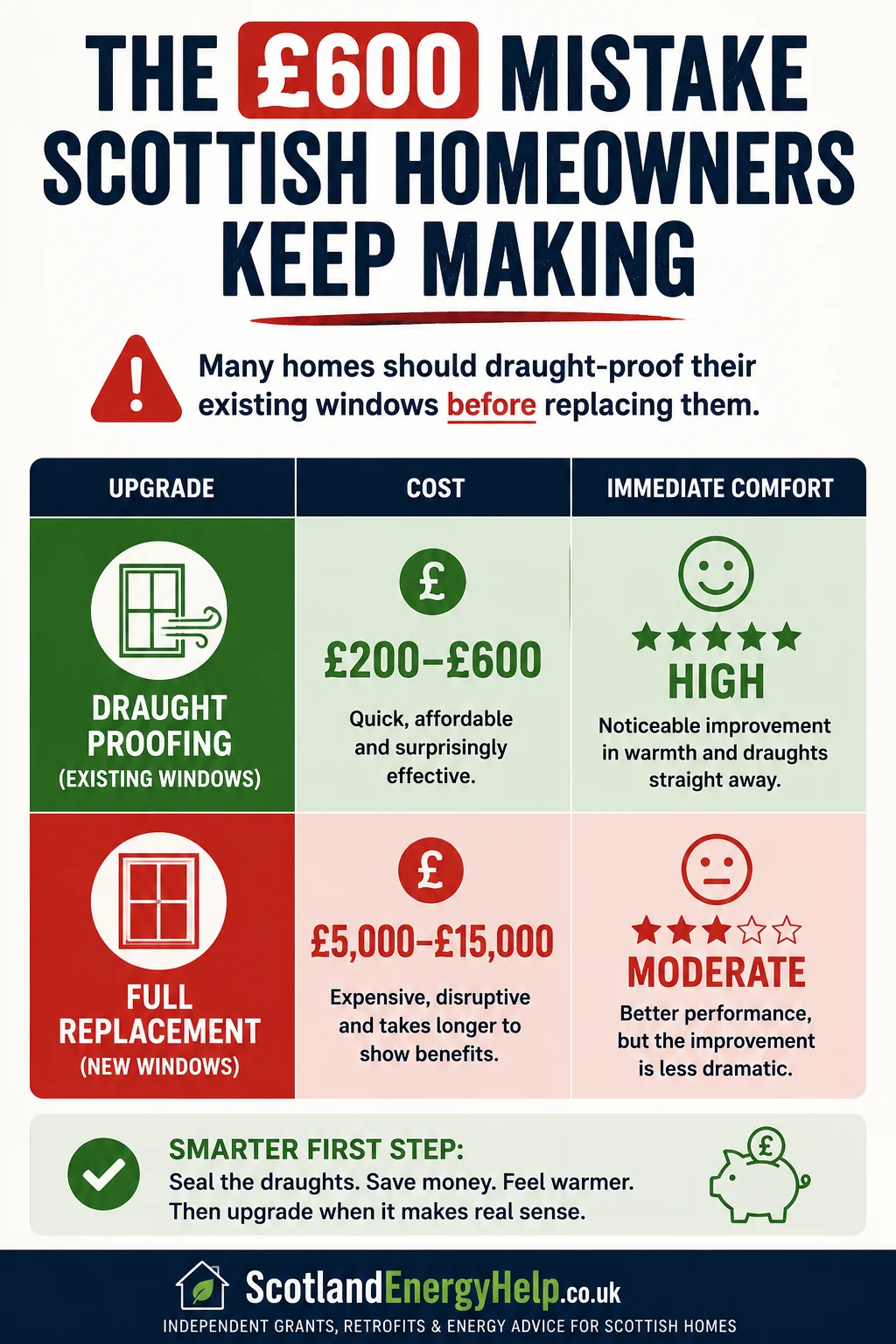
Draught reduction first: professional draught proofing of existing windows costs £200–£600 and is often the best first step before any replacement.
How bad is your window?
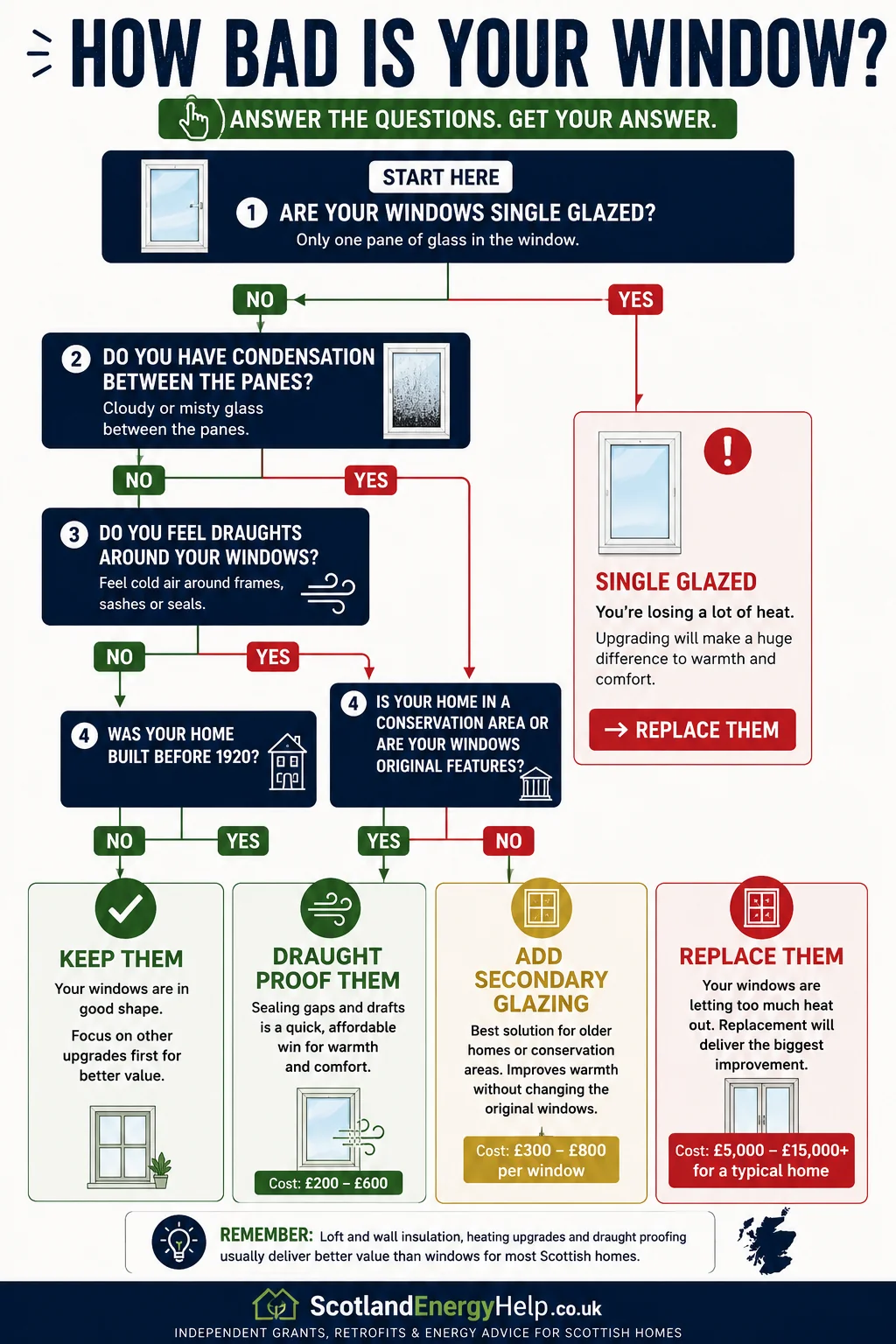
If your windows are single glazed, upgrading is usually the right call — you are losing a lot of heat and replacing them can make a huge difference to warmth and comfort.
If you have condensation between panes, that points to seal failure. If you feel draughts around frames and sashes, draught proofing may be the best first step.
For older homes in conservation areas or with original features, secondary glazing is often the best solution. If your current windows are otherwise sound, keep them and focus on higher-value upgrades first.
What window upgrades cost in Scotland
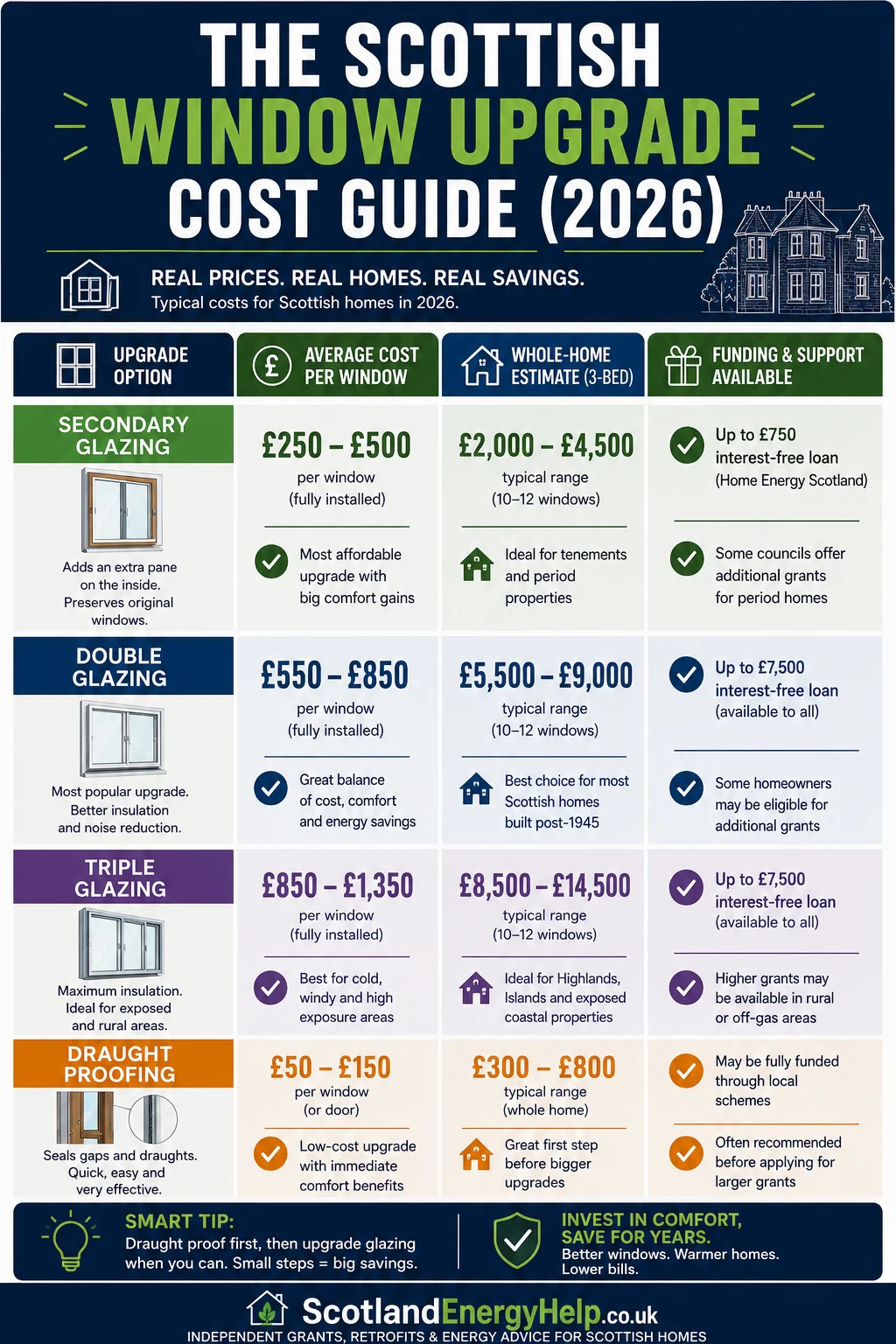
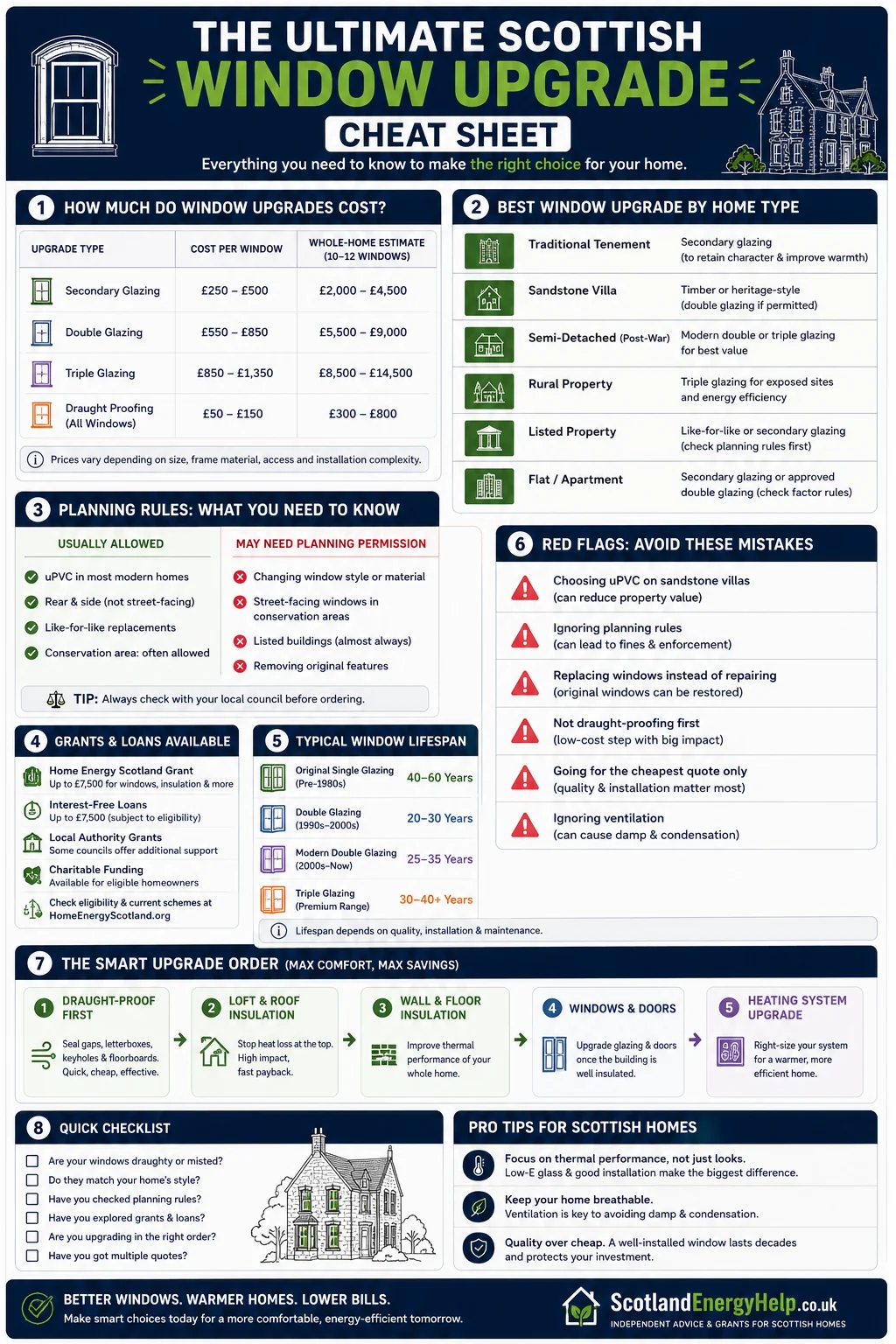
Typical 2026 installed costs are around £250–£500 per window for secondary glazing, £550–£850 for modern double glazing, and £850–£1,350 for triple glazing. Professional draught proofing usually costs £50–£150 per window or door.
For a typical 3-bed home, full-house totals often land around £2,000–£4,500 for secondary glazing, £5,500–£9,000 for double glazing, and £8,500–£14,500 for triple glazing.
That price gap is why choosing the right upgrade matters more than chasing the highest spec on paper.
Types of window upgrade
Secondary glazing — a second glazed unit fitted inside the existing window, retaining the original. Ideal for listed buildings, conservation areas, traditional sash and case windows, and tenement flats. Cost: £300–£800 per window. HES loan funding available.
Double glazing replacement — modern units use low-emissivity coatings and argon or krypton gas fill. Cost: £400–£900 per window installed. FENSA or CERTASS registered installer required for building regulations compliance.
Triple glazing — three panes and two insulating cavities. The marginal improvement over good double glazing is real but smaller than the single-to-double step. Cost: £600–£1,200 per window. Best suited to rural and island Scotland and exposed north-facing elevations.
What £10,000 on windows really gets you
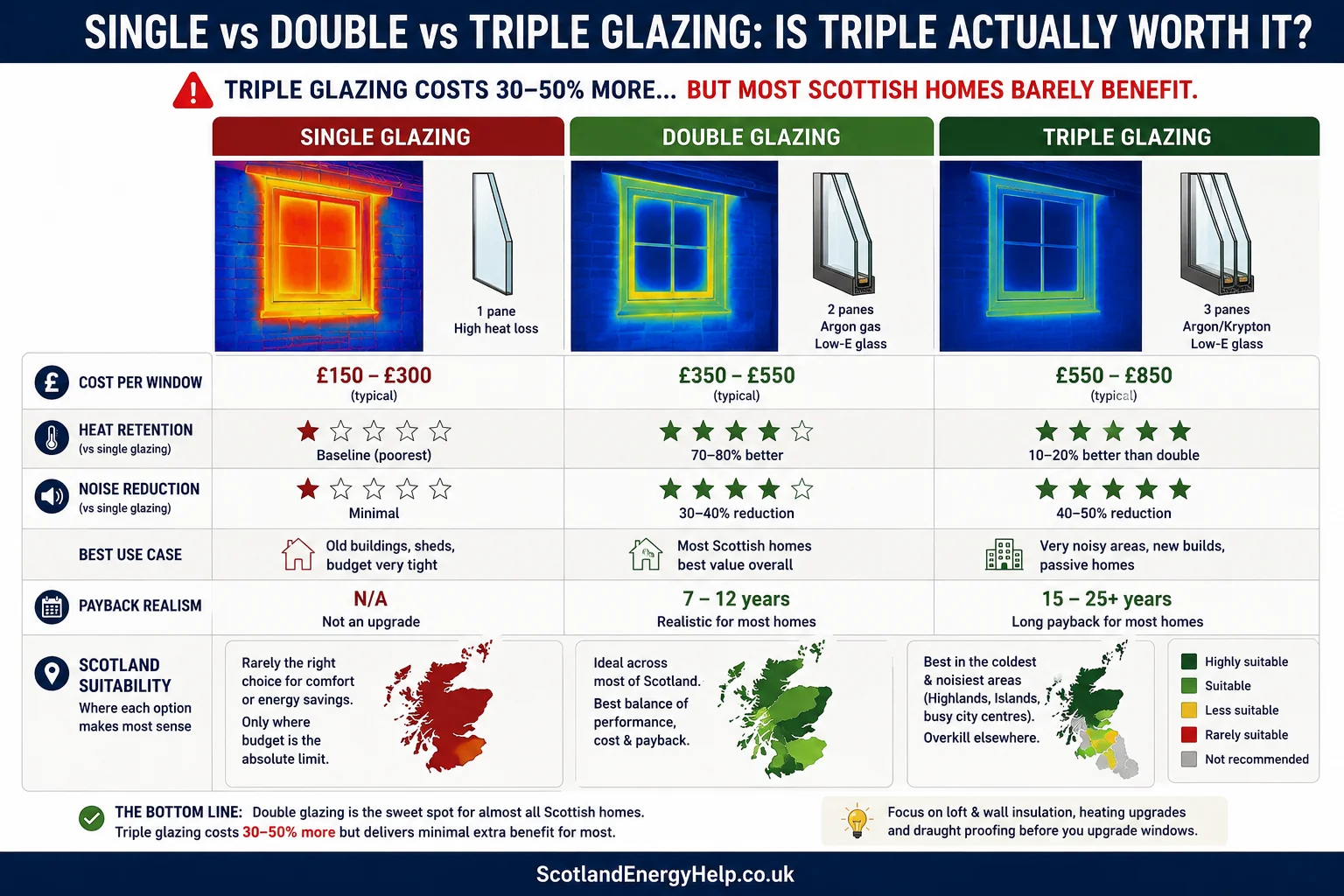
A £10,000 window budget usually buys comfort, quieter rooms and better kerb appeal — but not the biggest bill savings.
The same money often goes further on loft insulation plus a heat pump contribution, or solar combined with insulation, if your priority is lower running costs.
Windows can still be the right choice — but mainly when comfort, noise reduction, heritage needs or failed glazing are the real problem.
Old double glazing vs modern double glazing
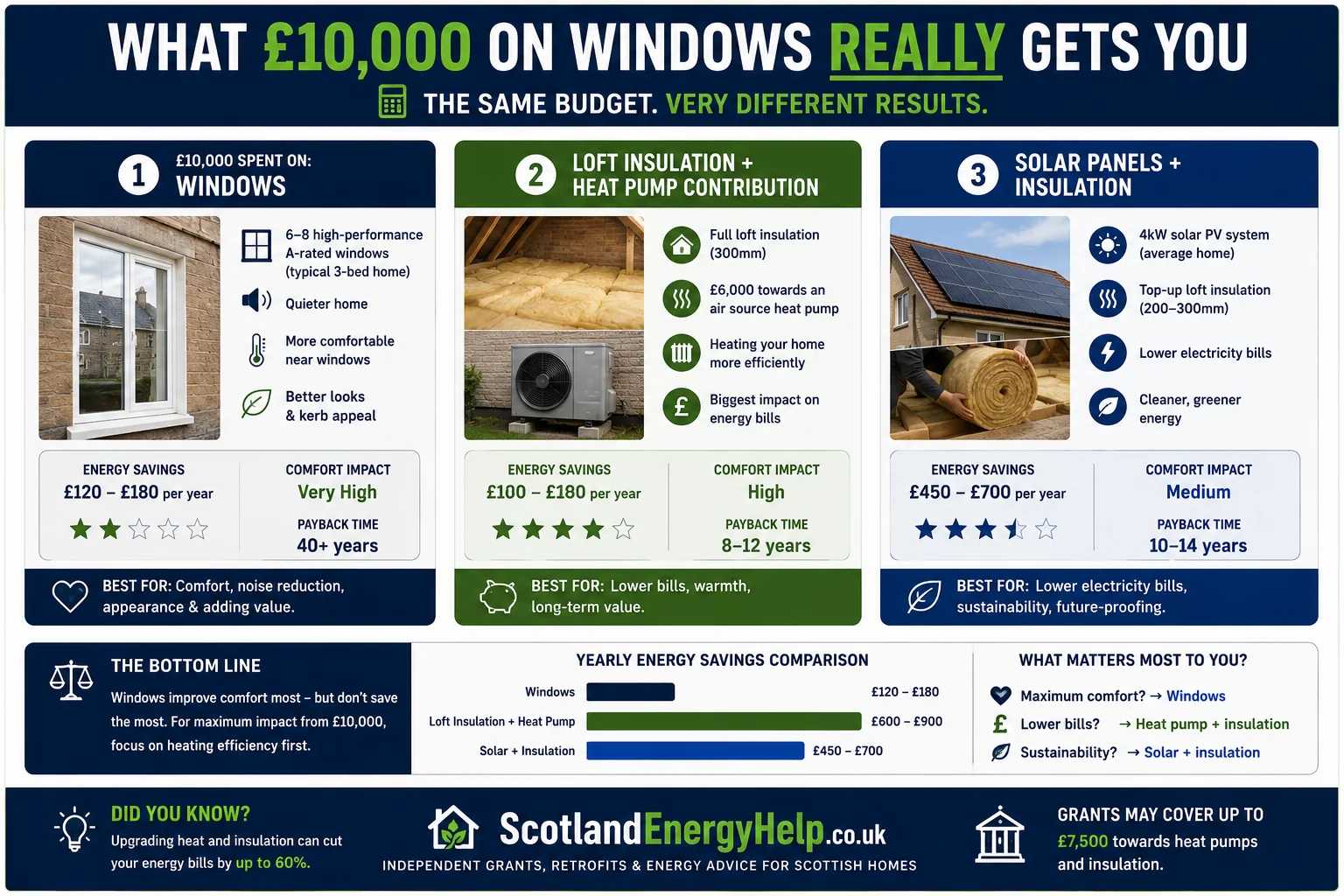
Early double glazing from the 1990s is often 20–30+ years old. Failed seals let moisture in between panes, causing misting, poor insulation and performance only slightly better than single glazing.
Modern units use low-E coatings, argon gas fill and advanced seals to keep heat in and moisture out. Typical U-values improve from around 2.7–3.0 W/m²K in old units to around 1.0–1.4 W/m²K in modern ones.
Replacing failed early double glazing can cut heat loss dramatically and make a much bigger comfort difference than homeowners expect.
What A-rated windows actually mean
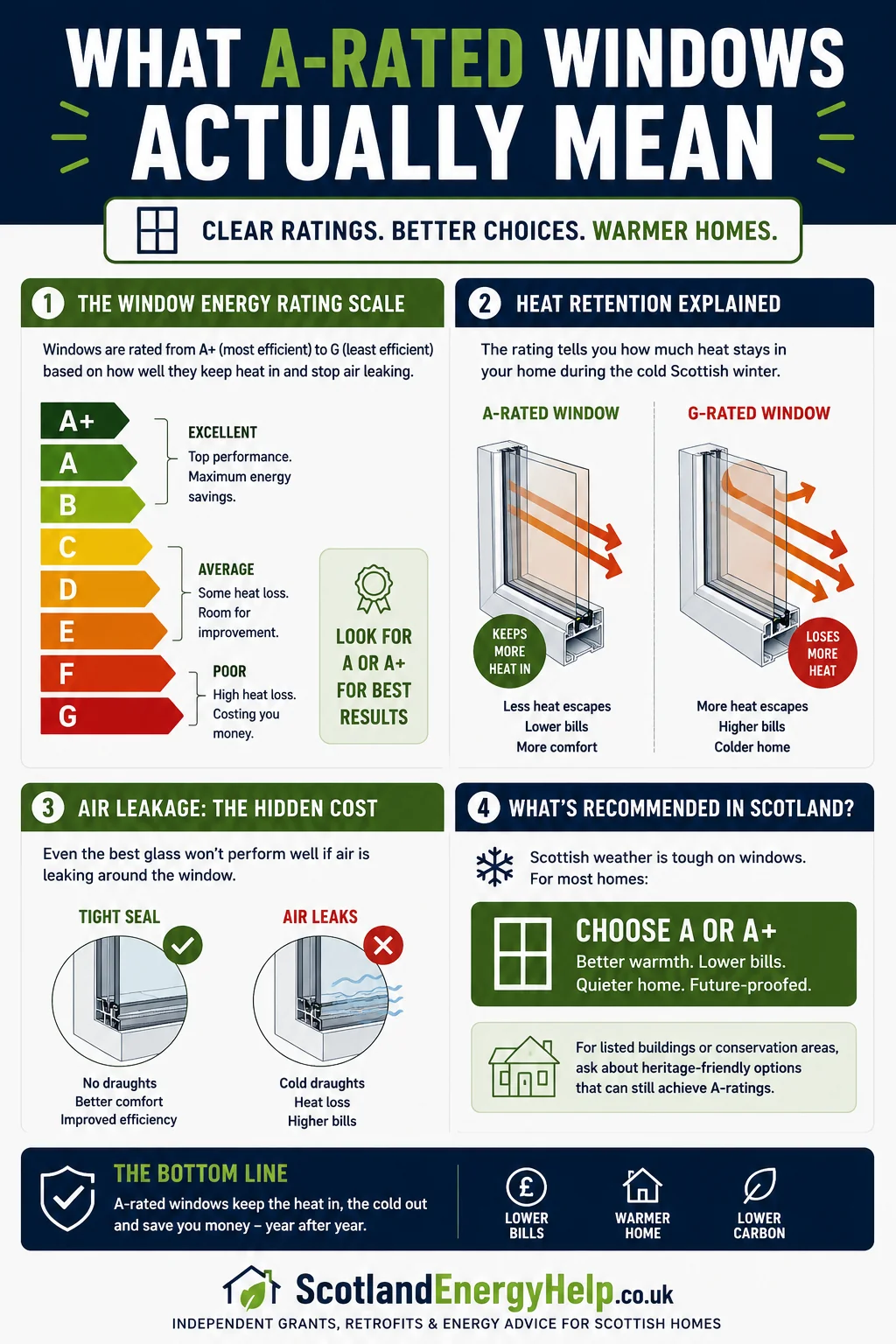
Window energy ratings run from A+ down to G. In plain English, an A or A+ rated window keeps more heat in, leaks less air and usually delivers the best balance of warmth and running-cost reduction.
The rating reflects the whole window, not just the glass. Frame quality, spacer bars, air tightness and installation standards all matter.
For most Scottish homes, A or A+ is the benchmark worth targeting — but only if the installer can deliver a tight, well-finished fit.
Grant and loan support for windows
Windows are NOT eligible for HES grants as a standalone measure.
HES interest-free loan: up to £7,500, available for window improvements as part of a broader retrofit plan.
Warmer Homes Scotland: may include windows as part of a fully-funded package for qualifying households.
ECO4: possible as part of a wider package for households on qualifying benefits.
0% VAT applies automatically to energy-saving window installations.
Scottish home types and windows
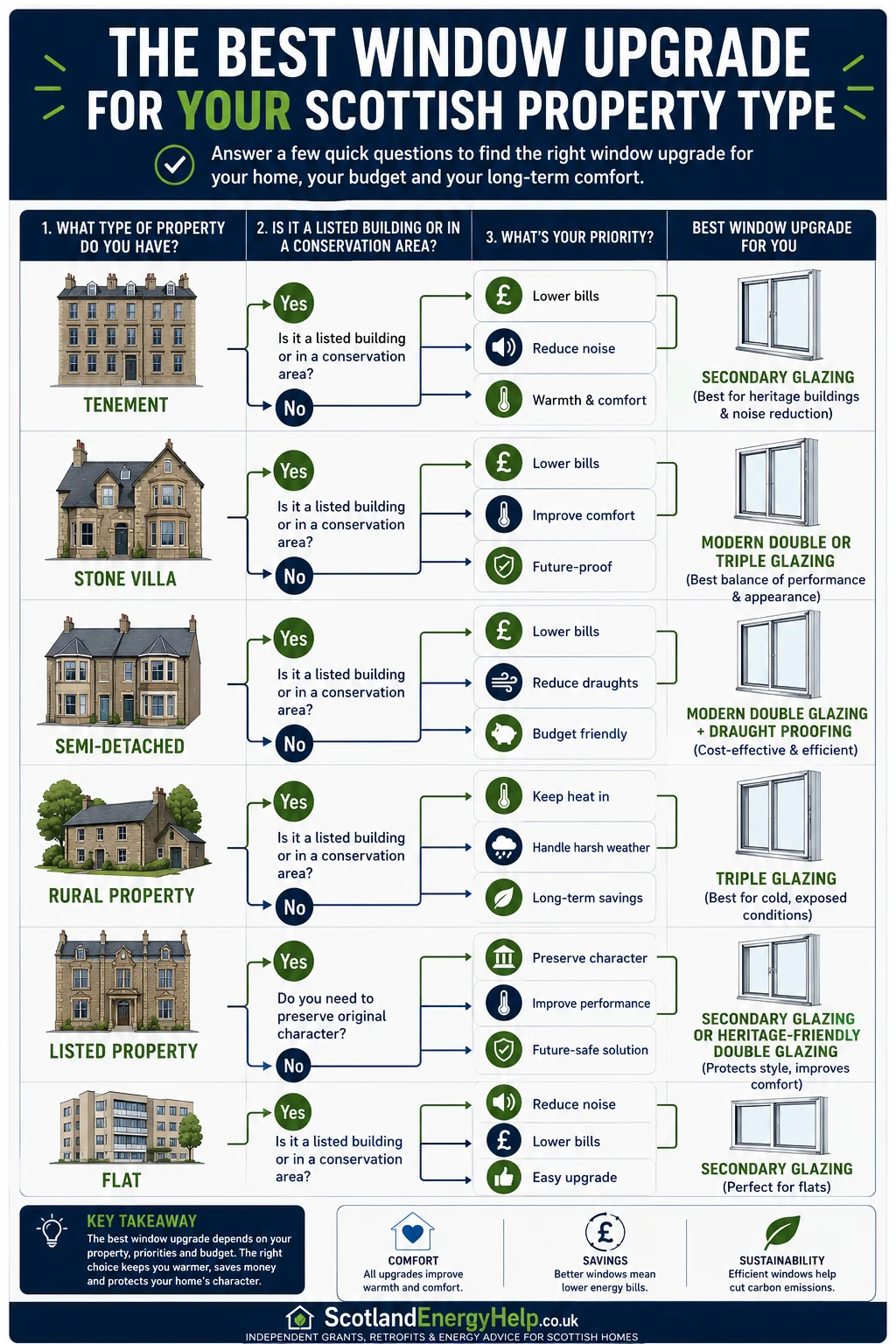
Glasgow tenements: full uPVC replacement is often not permitted in conservation areas. Best routes are secondary glazing, slim-profile timber/aluminium sash replacement (where planning allows), or draught-proofing existing sashes. Avoid standard uPVC casements.
Sandstone and stone homes: large windows mean disproportionate heat loss. Internal secondary glazing combined with internal wall insulation is often the most achievable significant fabric improvement programme.
Rural and island homes: high winds and driving rain make good window performance disproportionately important. Triple glazing is more financially justifiable here than elsewhere in Scotland.
Ex-council homes: if 1990s/2000s replacements are now over 20 years old with failed seals, modern replacements deliver a larger improvement than homeowners expect.
Where triple glazing actually makes sense
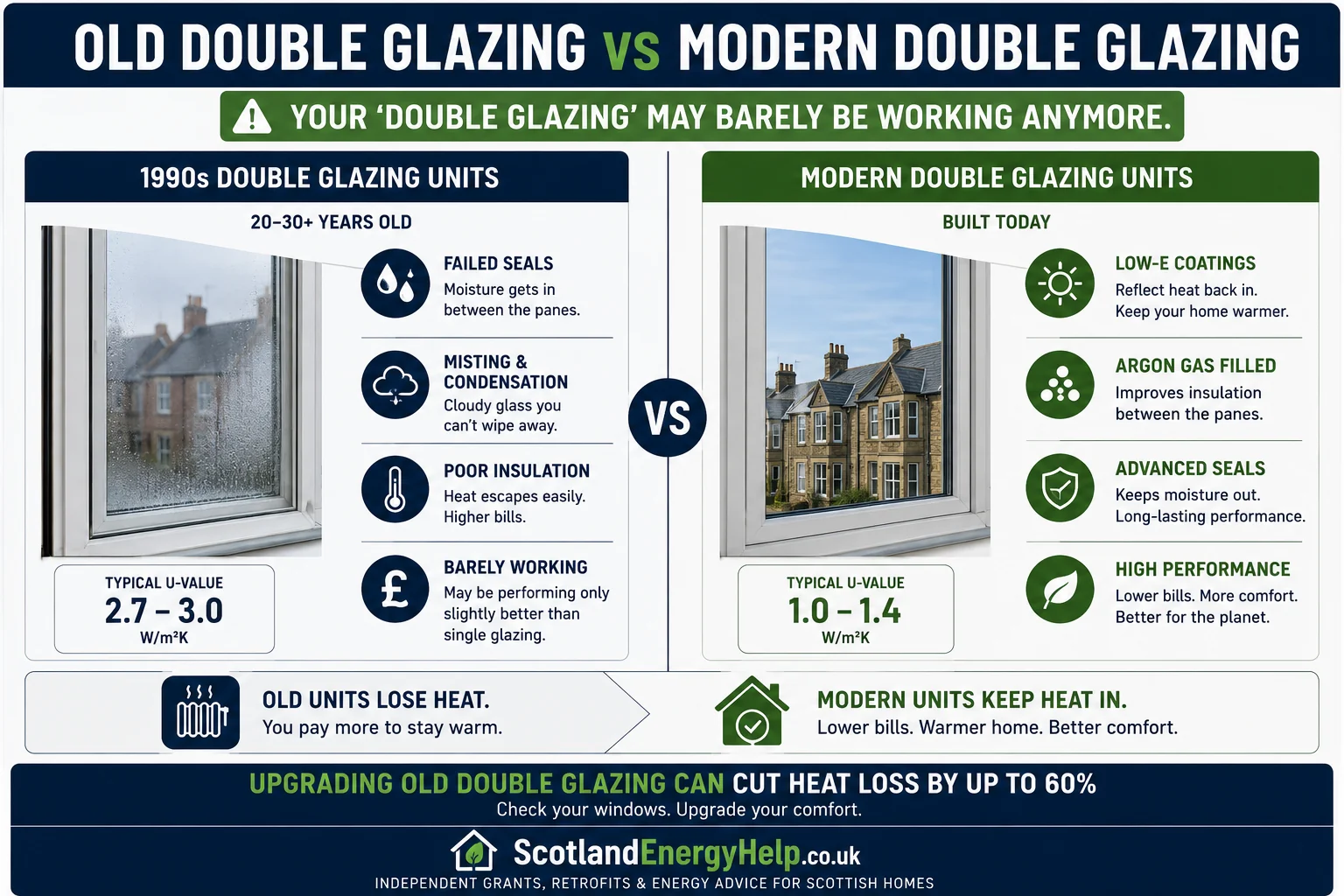
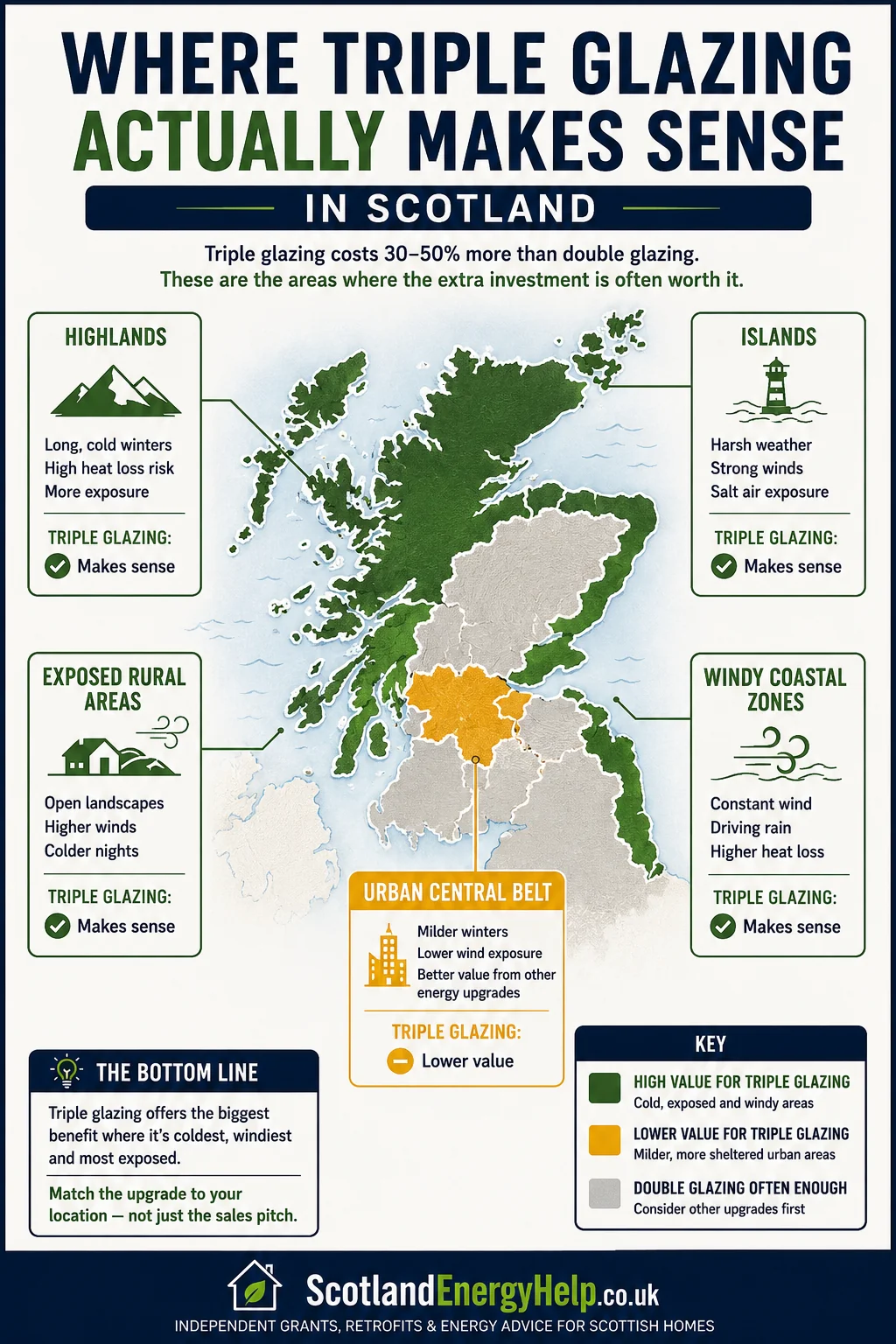
Triple glazing is most defensible in the Highlands, islands, exposed coastal locations and very windy rural sites where cold, weather exposure and driving rain are major issues.
In the urban Central Belt, the extra spend is often harder to justify because good double glazing plus better insulation and heating usually delivers more value.
Match the upgrade to the location. Triple glazing is a specialist answer, not the automatic best choice.
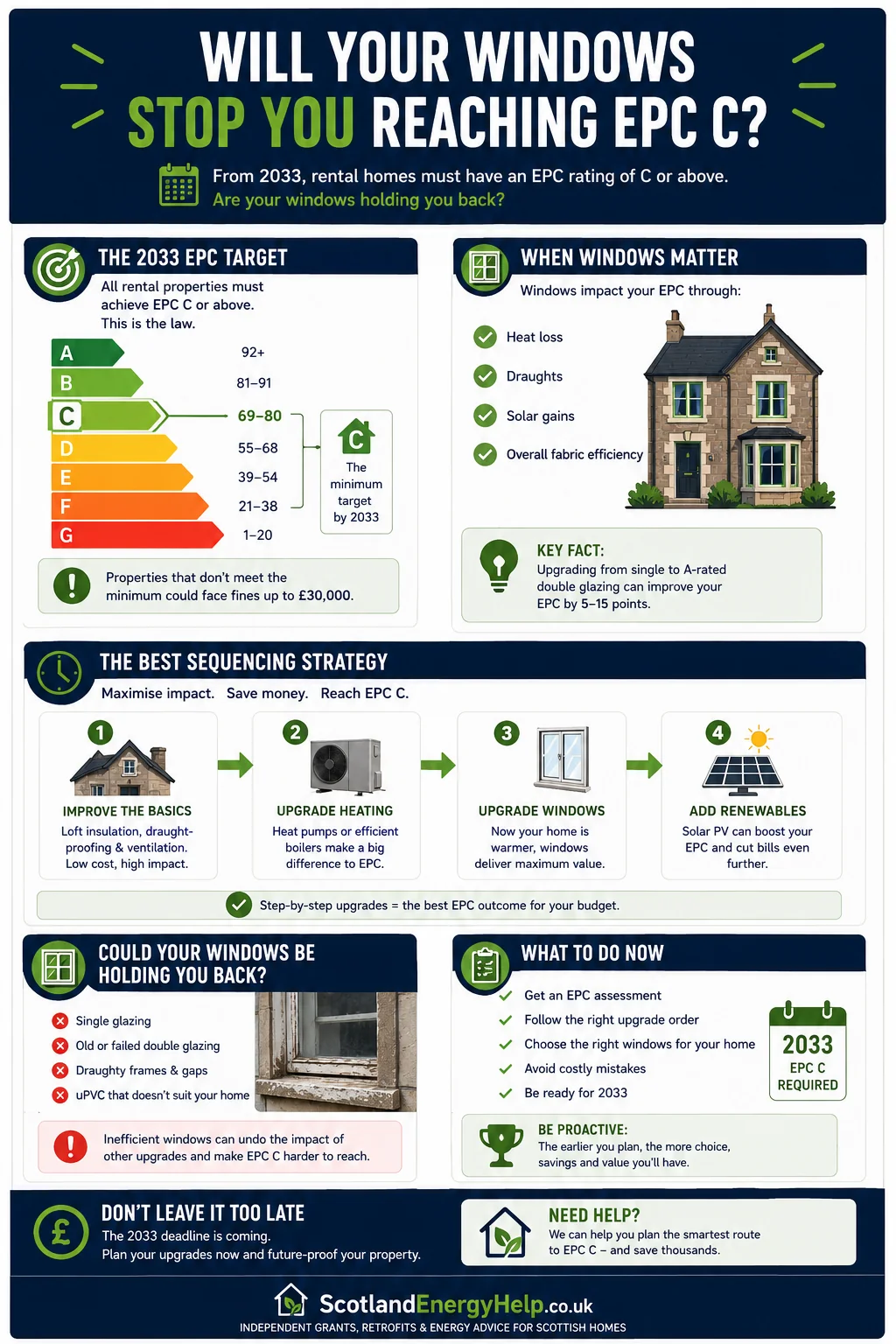
Will windows stop you reaching EPC C?
Windows can affect EPC performance through fabric heat loss, draughts and solar gains — especially if you still have single glazing or badly failed old units.
But the smartest route to EPC C is usually sequencing: draught proofing and insulation first, heating second, windows after that if they remain a weak point.
If you are planning for future standards, windows matter most when they are clearly outdated rather than simply unfashionable.
Listed buildings and conservation areas
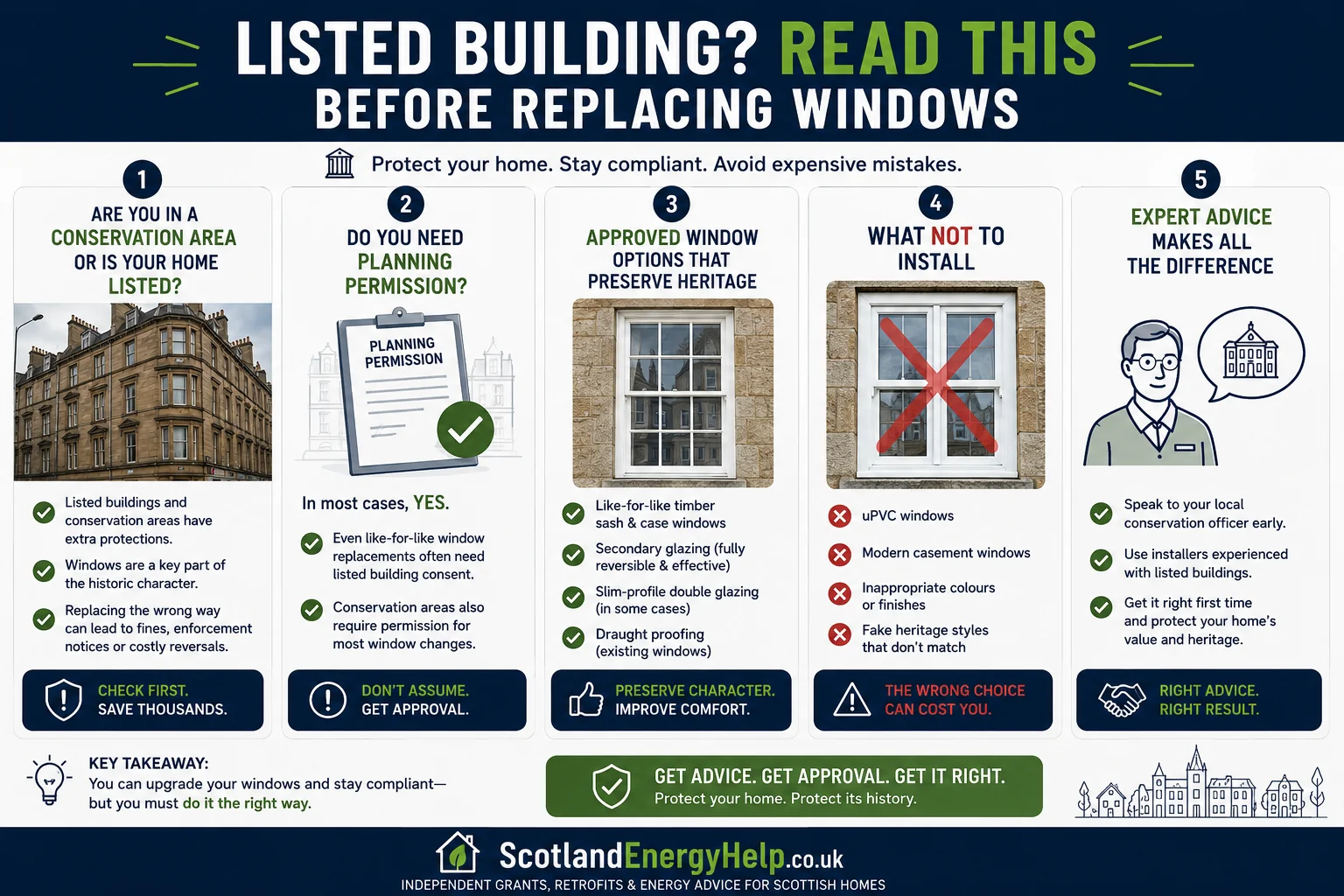
If your home is listed, or in a conservation area, check first — window changes often need listed building consent or planning permission even when they look like a like-for-like replacement.
Best options usually include like-for-like timber sash and case windows, secondary glazing, slim-profile double glazing in some cases, and draught proofing of existing windows.
Avoid uPVC windows, modern casement replacements, inappropriate colours or finishes, and fake heritage styles that do not match the original building.
Speak to your local conservation officer early and use installers experienced with listed buildings.
The most common window mistakes
The big avoidable mistakes are installing unsuitable uPVC on traditional homes, ignoring planning rules, replacing restorable originals, and skipping draught proofing before spending thousands on full replacement.
These mistakes hurt value as much as efficiency. In older Scottish homes, preserving character and getting the sequence right matters.
A good installer will talk honestly about repair, secondary glazing and staged upgrades — not just try to sell a full house package.

Finding a window installer
Look for installers registered with FENSA or CERTASS — the main competent person schemes for building regulations compliance — and TrustMark where works form part of an HES loan application.
Always get at least three quotes. Verify registration before signing any contract.
Be especially wary of window industry sales tactics: 'today only' discounts, fake crossed-out prices, pressure to sign on the first visit, and finance offers that hide the true long-term cost.

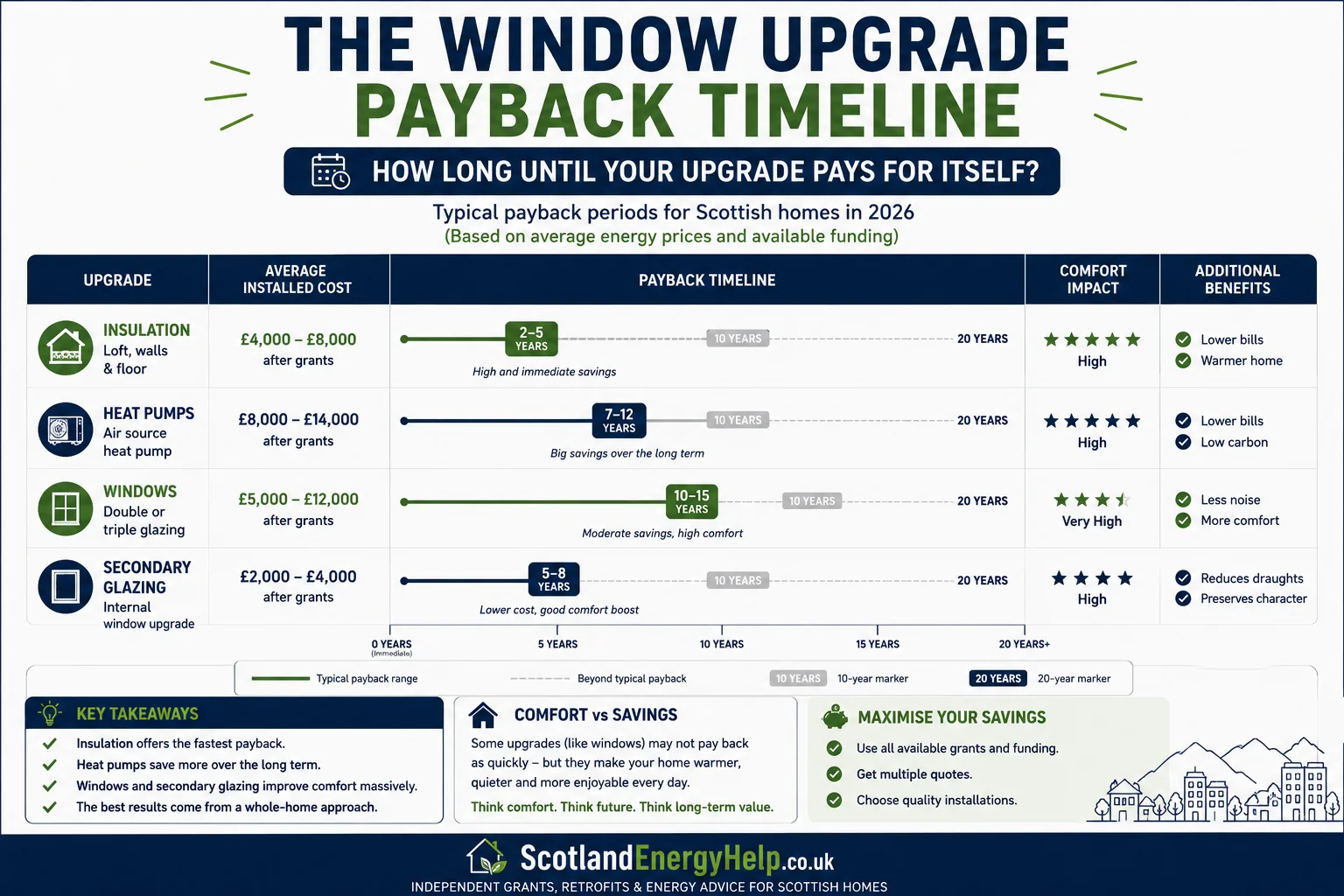
Window payback: comfort first, savings second
Insulation still gives the fastest typical payback. Heat pumps save more over the long term. Windows and secondary glazing often sit in the middle: slower to pay back financially, but very strong for comfort and noise reduction.
Typical payback periods are often around 10–15 years for full window replacement and 5–8 years for secondary glazing, depending on your starting point and available support.
That is why windows should be judged partly on comfort, condensation and heritage fit — not just on headline bill savings.
Frequently asked questions
Do I need planning permission for new windows in Scotland?+
In most cases no — replacing windows is permitted development. The main exceptions are listed buildings (consent required), conservation areas (some changes need permission), and flats where the change affects the common appearance.
Is secondary glazing as effective as double glazing?+
Not quite — but it is significantly better than single glazing and in some cases performs comparably to basic double glazing. For listed and conservation properties, secondary glazing is the recognised solution. Its draught reduction is often as significant as the thermal improvement.
How long does double glazing last?+
Modern double glazing from a quality installer should last 20–25 years before sealed units begin to fail. The first sign of failure is misting between the panes as the gas seal breaks down.
Are uPVC windows suitable for traditional Scottish homes?+
Standard uPVC casements are not generally appropriate for tenements, sandstone villas and stone-built homes. Timber or aluminium alternatives that replicate traditional profiles are more suitable, and secondary glazing preserves original windows entirely.
Should I prioritise windows or insulation?+
For most Scottish homes, loft and wall insulation deliver better value per pound spent. Get insulation right first — then address windows, particularly if you still have single glazing or failed double glazing.
What is an A-rated window?+
Window energy ratings run from A+ to G (British Fenestration Rating Council). A-rated windows have excellent thermal performance and low air leakage. For Scotland, A or B-rated is recommended as a minimum, considering the whole window — frame, glazing and spacer bars.
Get this as a branded PDF
Save it, print it, share it with your contractor.