
How much support can you get?
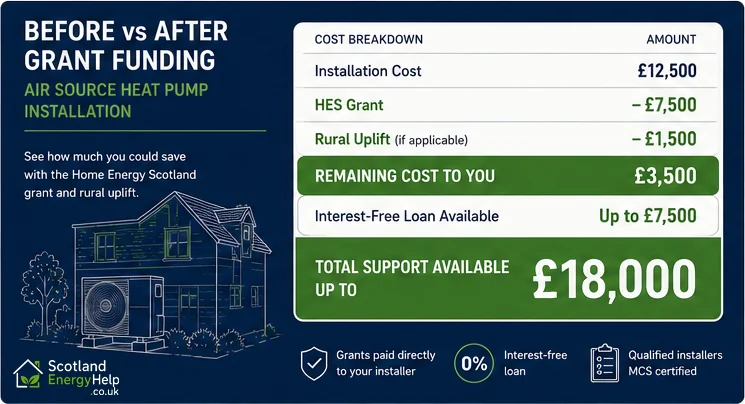
For an air source heat pump installation, Home Energy Scotland support can be substantial. The standard grant is up to £7,500. Rural and island households can receive an additional £1,500 uplift, taking the grant to £9,000. On top of that, there is an interest-free loan of up to £7,500.
That means total support can reach £18,000 for eligible rural homeowners. In practice, grants are paid directly to the installer, which can dramatically reduce the amount you pay upfront.
Why rural Scotland benefits most
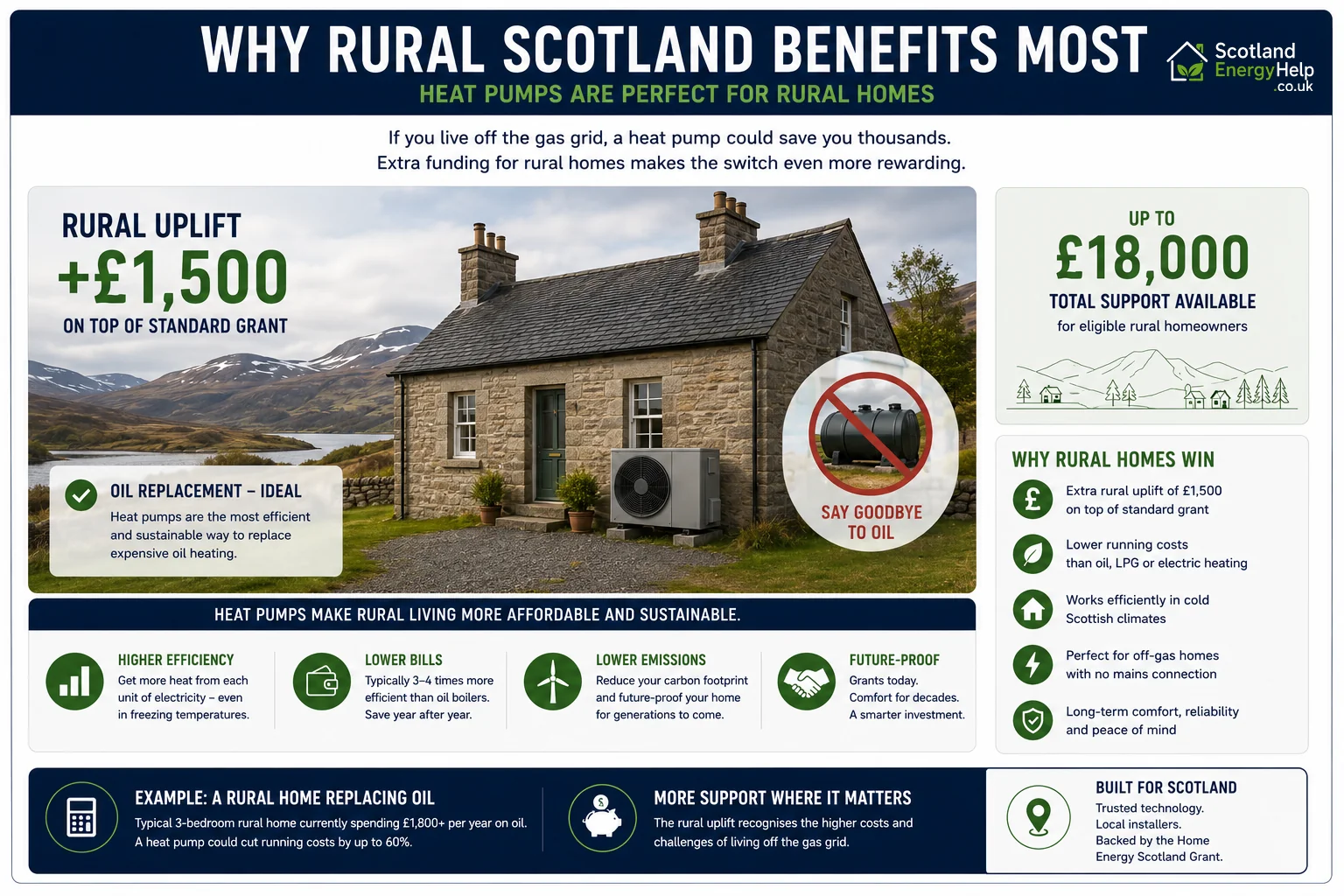
If you live off the gas grid, a heat pump can be one of the strongest upgrades available. Rural households replacing oil, LPG or direct electric heating often see the biggest running-cost savings, and the extra rural uplift adds £1,500 on top of the standard grant.
For many rural homes, that brings total support to up to £18,000. Heat pumps also work efficiently in cold Scottish climates and are especially well suited to off-gas properties with no mains connection.
Running costs — the honest picture
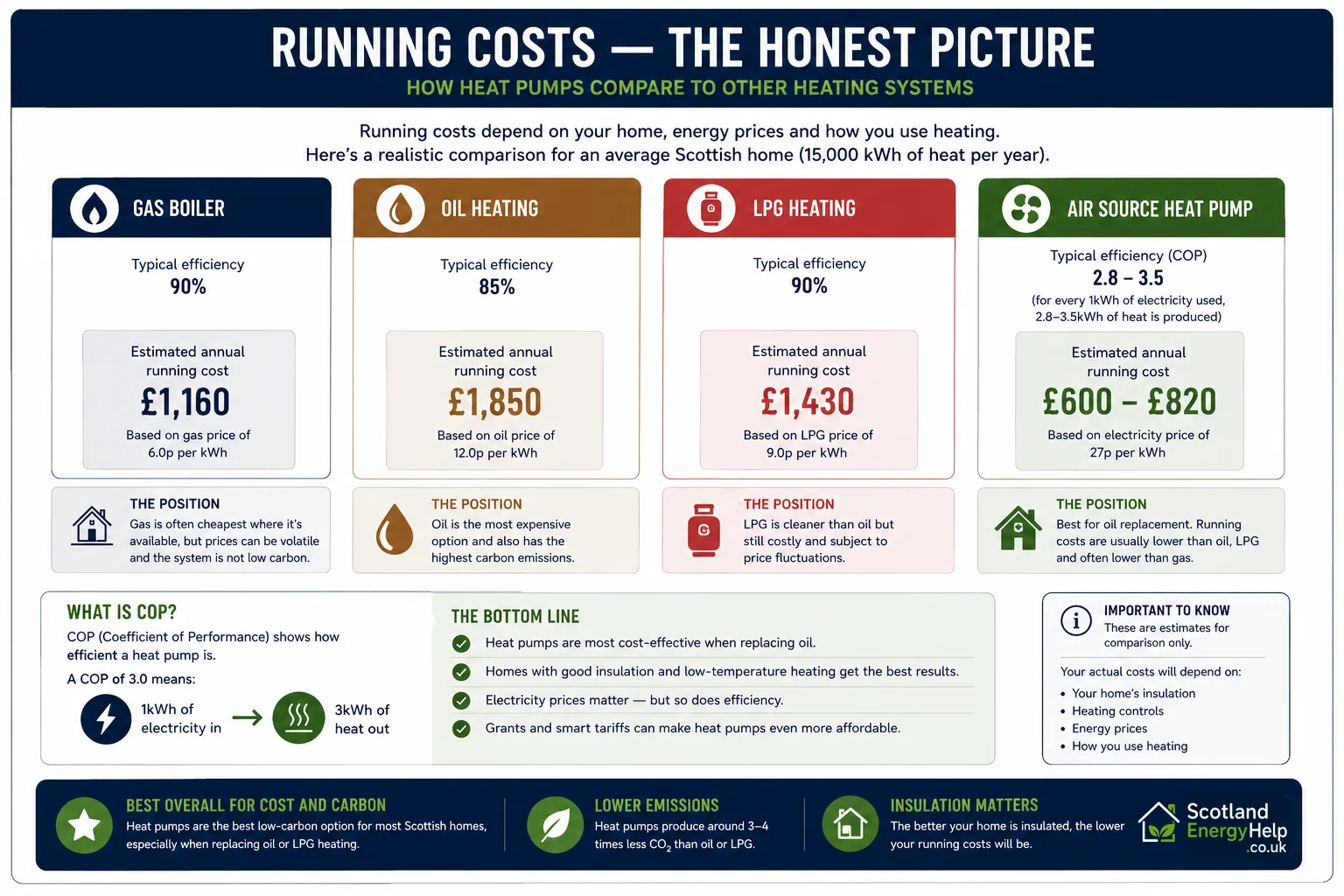
Heat pumps are usually most cost-effective when replacing oil or LPG heating. Typical annual running costs for an average Scottish home are often lower than oil and LPG, and can be competitive with gas depending on insulation, controls and electricity prices.
The key point is honesty: running costs depend on your home, your heat demand and how you use the system. Homes with good insulation and low-temperature heating get the best results. Electricity prices matter — but so does efficiency.
How heat pumps actually work
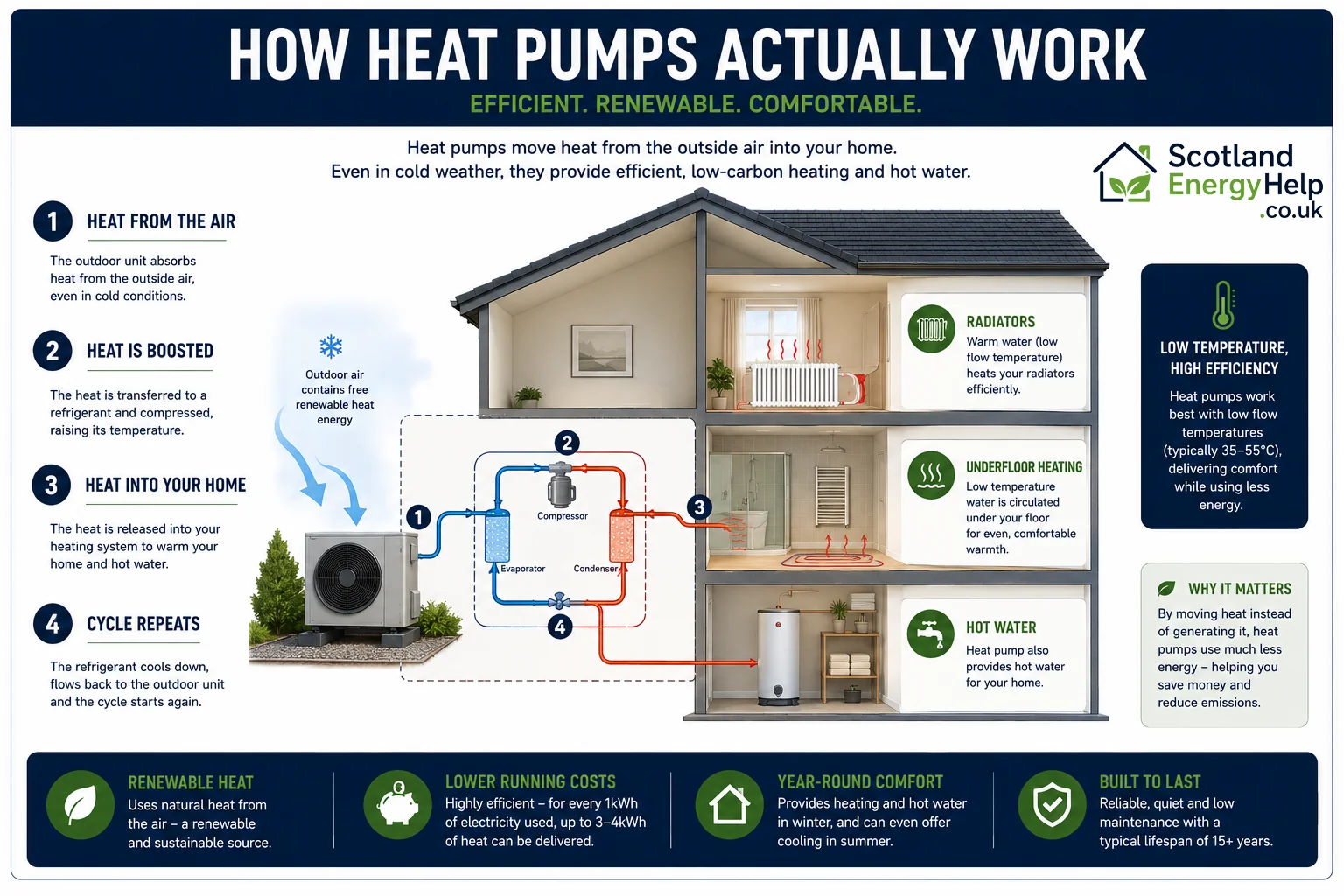
Heat pumps move heat from the outside air into your home. The outdoor unit absorbs renewable heat energy from the air, transfers it to a refrigerant and compressor, raises the temperature, then releases that heat into your heating system and hot water cylinder.
Because they move heat rather than generate it directly, they can deliver roughly 2.8–3.5kWh of heat for every 1kWh of electricity used. They work best with lower flow temperatures, typically around 35–55°C, which suits underfloor heating and properly sized radiators.
Is a heat pump right for your home?
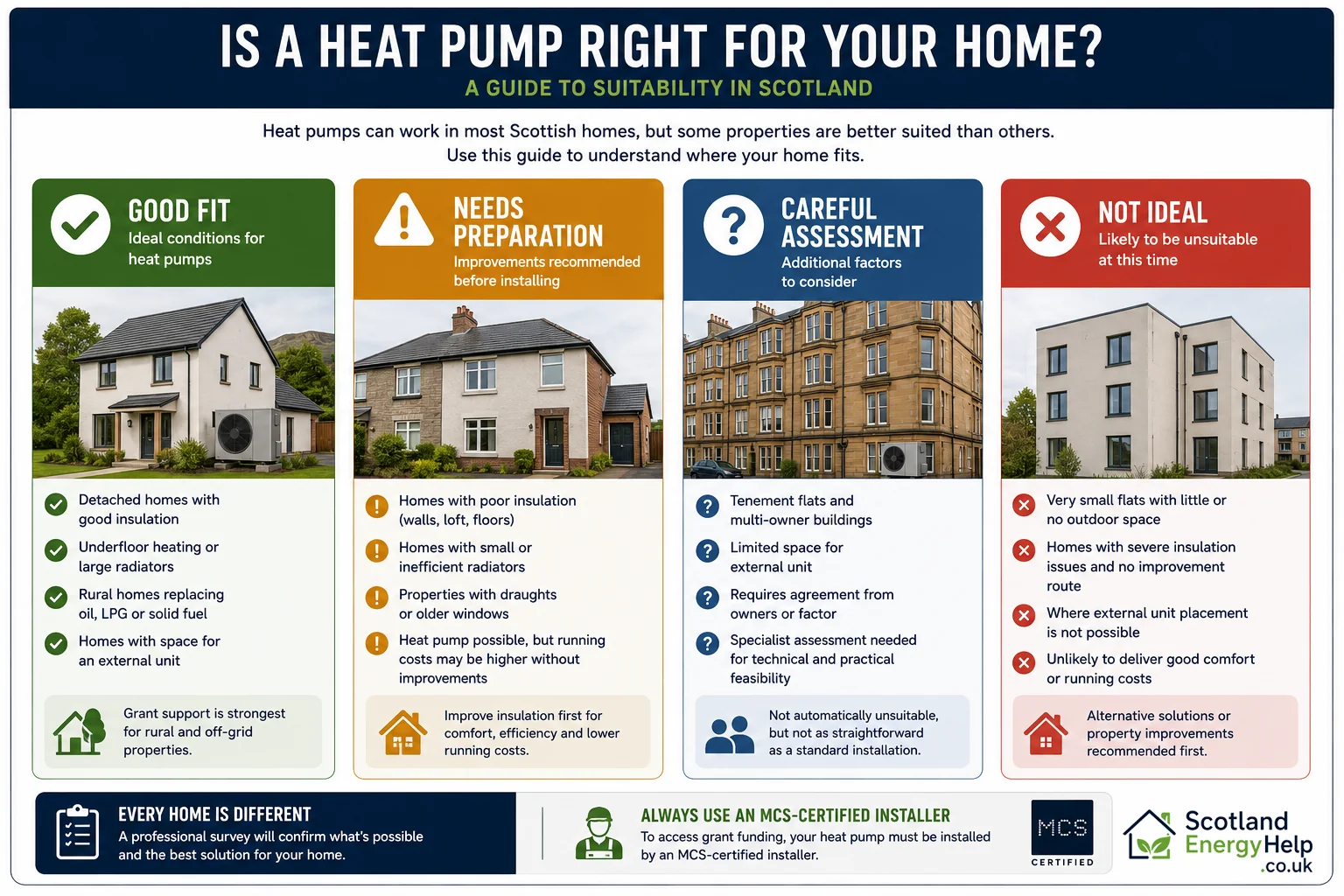
A heat pump can be a good fit for detached homes with good insulation, large radiators or underfloor heating, and enough outdoor space for an external unit. Rural homes replacing oil, LPG or solid fuel are often especially good candidates.
Homes with poor insulation, draughts or small radiators may need preparation first. Tenement flats and multi-owner buildings can still be possible, but require careful assessment, suitable external unit placement and often agreement from other owners or a factor.
Always use an MCS-certified installer
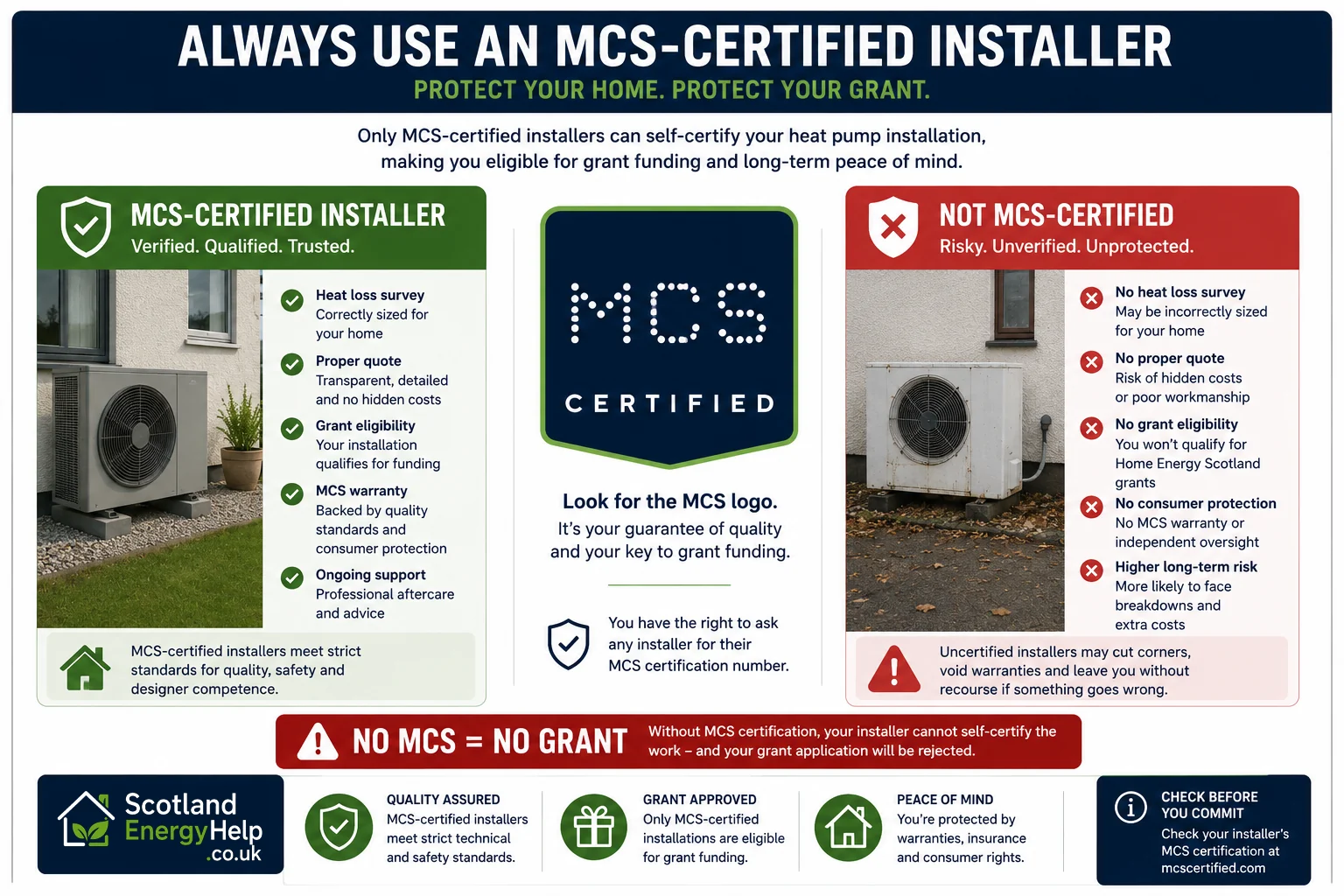
Only MCS-certified installers can self-certify a heat pump installation and make you eligible for grant funding. An MCS-certified installer should provide a proper heat-loss survey, a transparent quote, the right system sizing and access to warranties and consumer protections.
Without MCS certification, your installation may not qualify for grant support and you could be exposed to poor workmanship, hidden costs and no meaningful recourse if something goes wrong. Always verify the installer's certification number before you commit.
What the installation process looks like
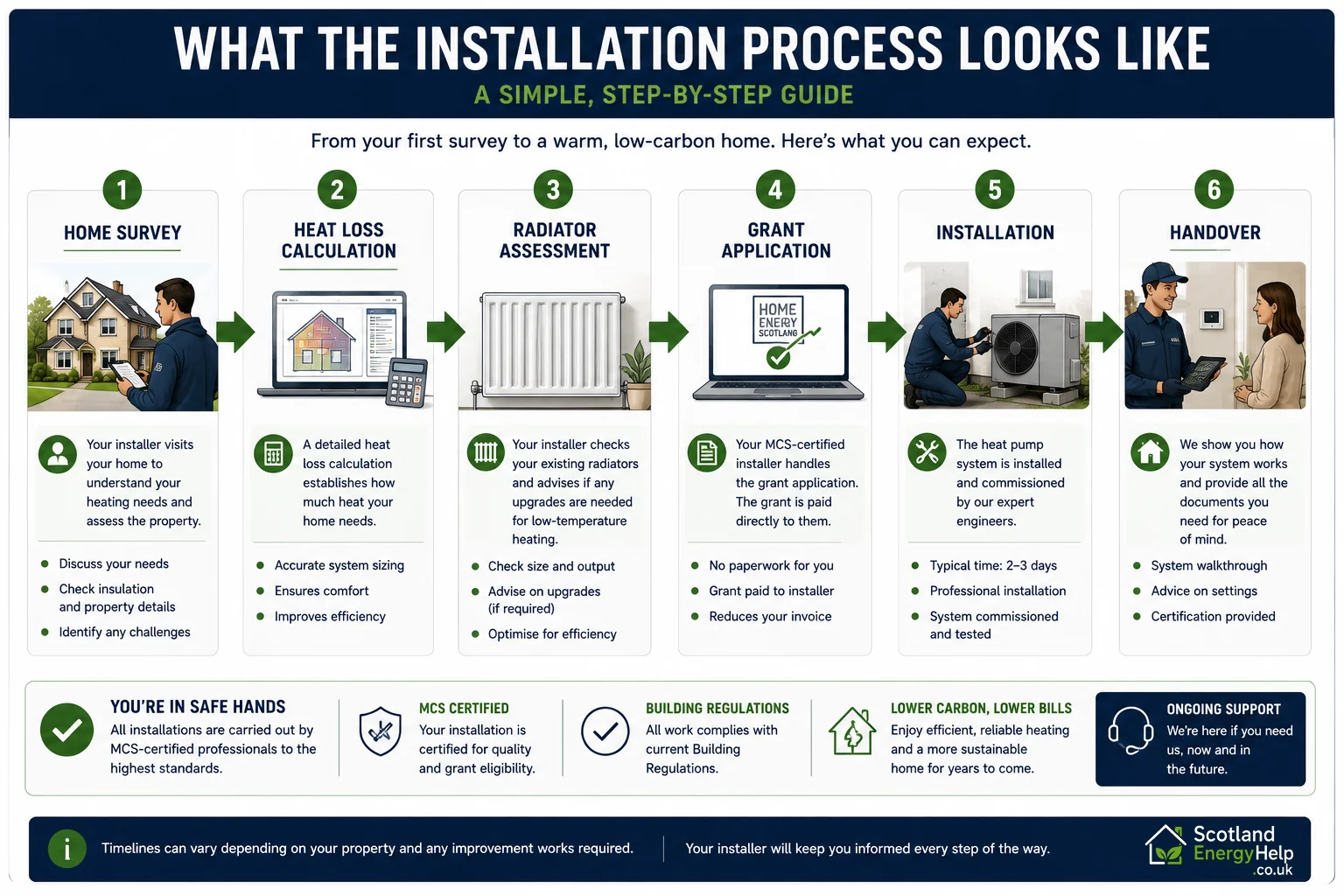
A proper installation usually follows six steps: home survey, heat-loss calculation, radiator assessment, grant application, installation and handover. The survey establishes how much heat your home needs, while the radiator assessment checks whether upgrades are needed for low-temperature heating.
Your MCS-certified installer normally handles the grant paperwork. The installation itself typically takes 2–3 days, after which the system is commissioned, settings explained and certification provided.
Frequently asked questions
Will a heat pump cost more to run than gas?+
Sometimes, but not always. In a well-insulated home with a properly designed low-temperature system, running costs can be competitive with gas and are often lower than oil or LPG. In a poorly insulated home, costs can be higher, which is why preparation matters.
Do I need an MCS-certified installer to get the grant?+
Yes. If your installer is not MCS-certified, the work will not qualify for Home Energy Scotland grant funding.
Get this as a branded PDF
Save it, print it, share it with your contractor.