
Scotland's post-war council housing stock
Hundreds of thousands of homes built between the 1940s and 1980s — many now owner-occupied following right-to-buy — make up a housing type with its own retrofit characteristics. If you own an ex-council house or flat, this guide explains what improvements matter most, which grants apply, and how to access them.

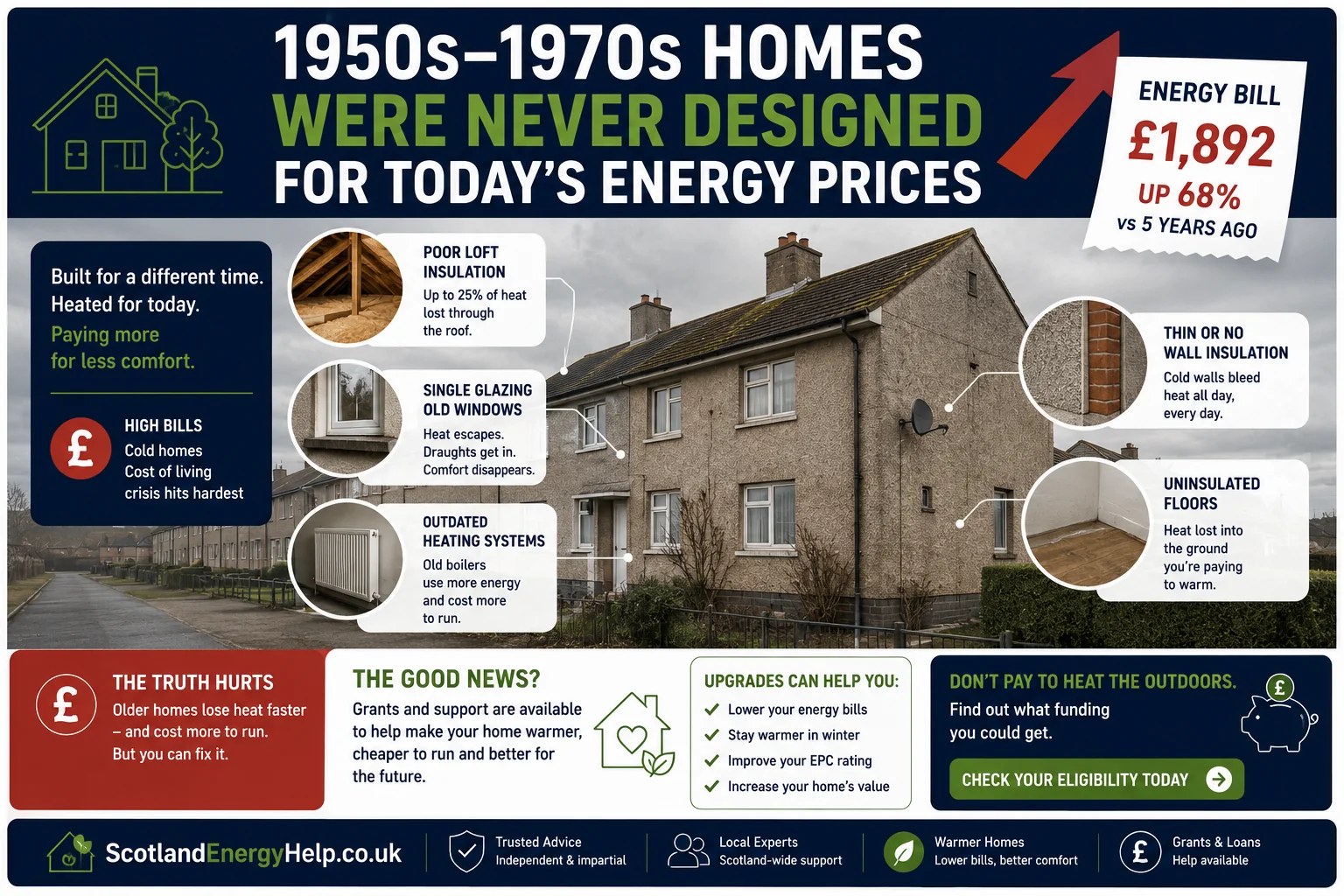
Built for a different time, heated for today
Homes from the 1950s–1970s were never designed for today's energy prices. Poor loft insulation, single glazing, thin or no wall insulation, uninsulated floors and outdated heating systems combine to push energy bills well above the Scottish average — but every one of these is fixable with the right grant package.
Understanding your property's construction
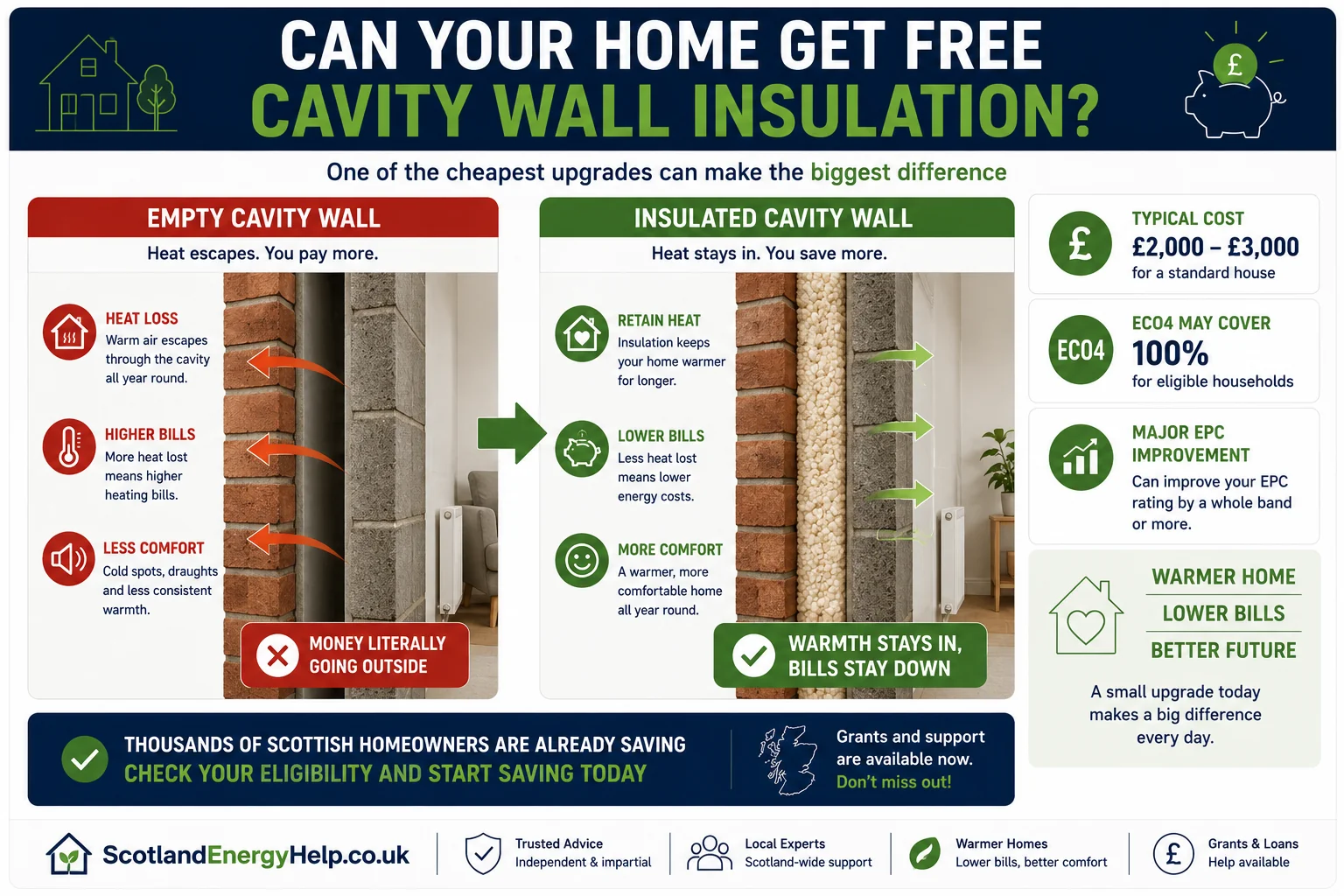
Post-war council homes were built using a range of methods. Cavity wall construction (mid-1940s onward) is two leaves of brick or block with a gap between — if unfilled, cavity insulation typically costs £2,000–£3,000 and is the highest-impact, lowest-cost measure available.
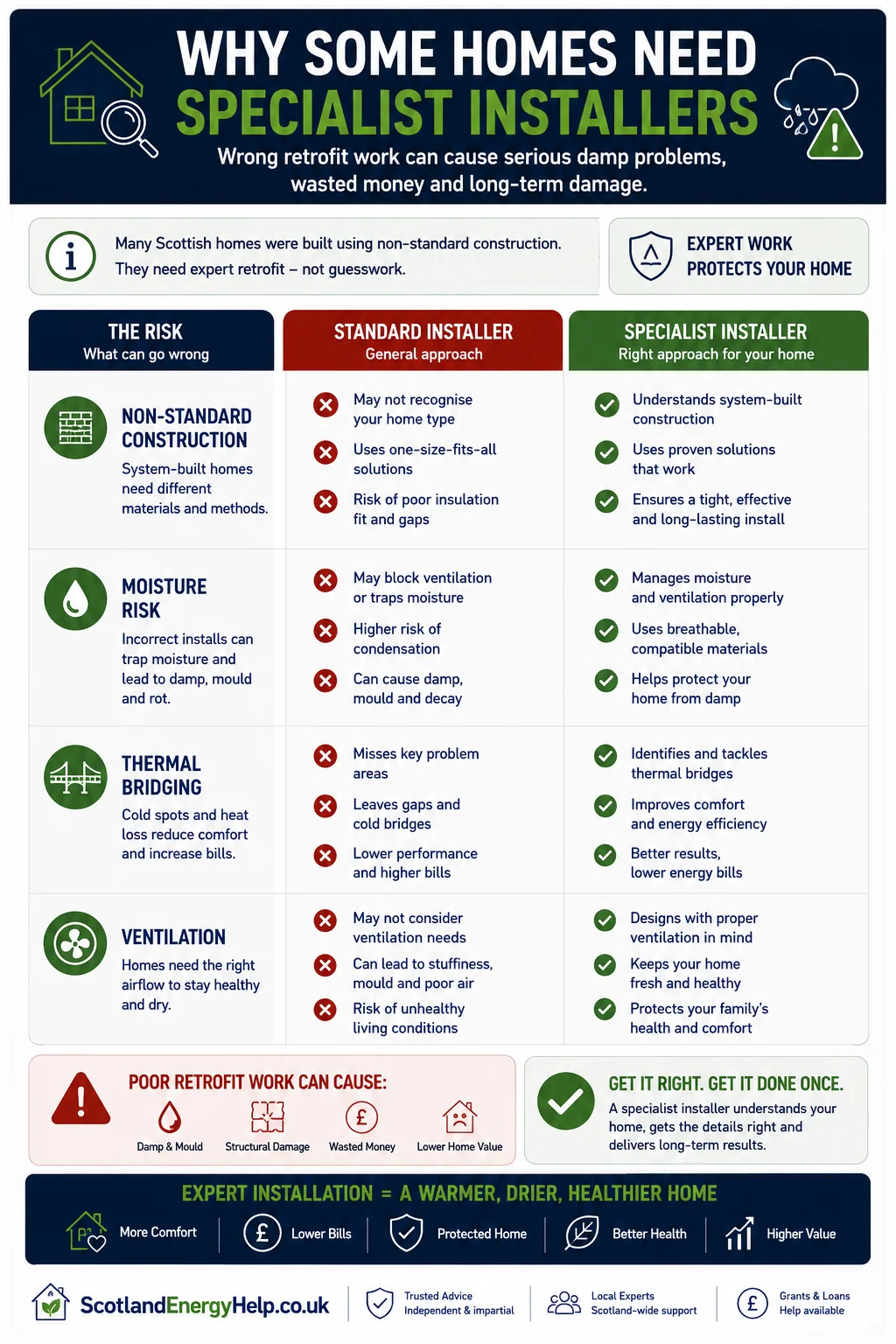
Non-traditional and system-built homes from the 1950s–60s — Wimpey no-fines, Airey, Reema, steel-framed, concrete panels — need specialist assessment. Some are classed as non-standard by mortgage lenders. An EPC from an assessor familiar with these systems will identify the building type.
Timber-framed council homes from the 1970s onward usually have insulation in the wall panels but it may have degraded. Specialist assessment avoids moisture issues.

Most relevant improvements for ex-council homes
Cavity wall insulation — if unfilled, this is your top priority. Free under ECO4 with qualifying benefits, or covered by HES loan funding.
Loft insulation — many ex-council lofts are accessible and easy. Upgrade to 270mm depth. HES grants cover up to 75% of costs.
Heating system upgrade — old gas boilers or electric storage heaters often hold ex-council homes back. Modern condensing boilers, high-retention storage heaters or heat pumps (HES grants up to £7,500) are the typical step up.
Windows and doors — original single glazing or early double glazing can be upgraded with HES loan funding.
Specific challenges
Flats in multi-story blocks face shared-ownership issues — works on common parts need agreement from other owners or the factor. Where the council still owns the building, the landlord must be involved.
Non-standard construction needs installers with the right experience. Always confirm an installer has worked on your specific construction type.
Pre-existing insulation from old programmes can be variable in quality. If your home feels colder than it should, a thermal imaging survey can identify cold bridges or voids before you invest in more measures.
Which grants apply
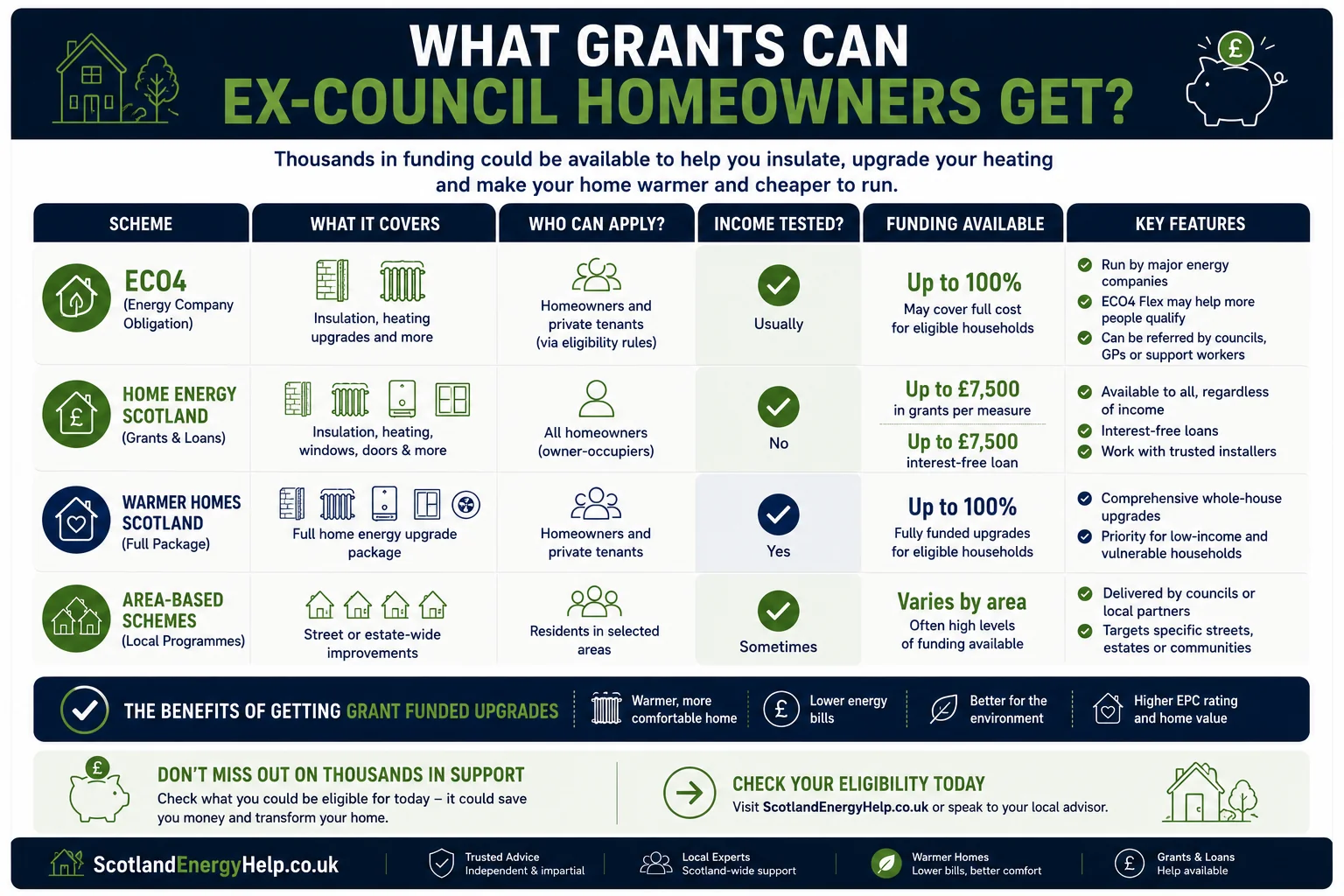
Home Energy Scotland Grant and Loan — open to all owner-occupiers regardless of income. Grants up to £7,500 per measure plus interest-free loans up to £7,500.
ECO4 — particularly relevant. Qualifying benefits unlock free cavity wall insulation, loft insulation and sometimes heating upgrades. Access through your energy supplier or council ECO4 Flex referral.
Warmer Homes Scotland — fully-funded package for owner-occupiers meeting income or vulnerability criteria. Contact HES to check eligibility.
Area-based schemes — many councils run these targeting former council estates, delivering cavity fill and loft insulation street-by-street. Contact your council energy team to see if your area is in a current or upcoming programme.
Area-based schemes — could your estate qualify?
Some Scottish councils coordinate energy upgrades street-by-street through area-based schemes — covering insulation, heating, windows and ventilation across whole estates. If your neighbours are upgrading, you could benefit too. Contact your council energy team to see if your area is on the programme.

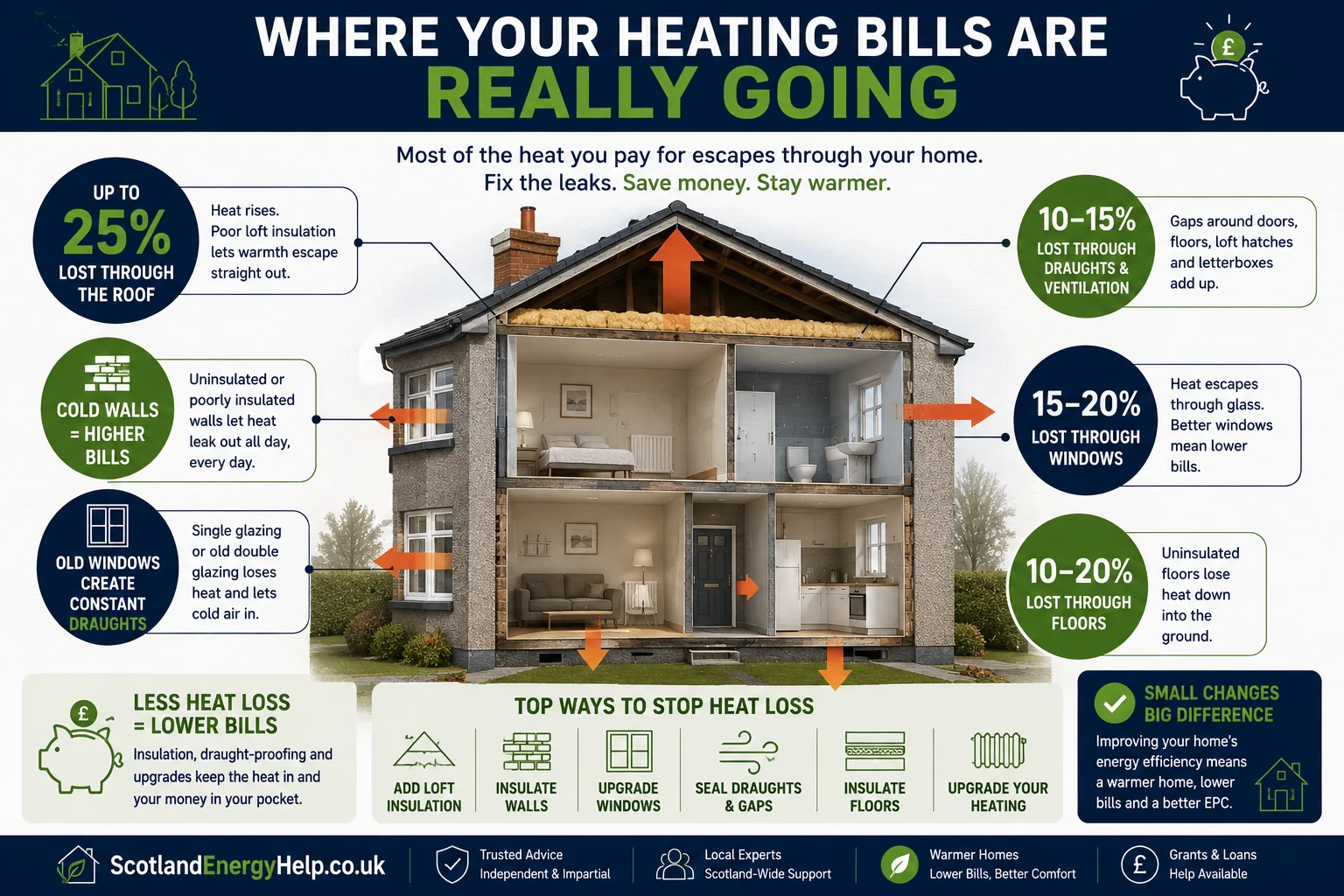
Where your heating bills are really going
In most post-war homes, heat loss is concentrated in a few familiar places: up to 25% through the roof, 15–20% through windows, 10–20% through floors and 10–15% through draughts and ventilation gaps. That is why basic insulation upgrades usually outperform expensive cosmetic changes.
The EPC picture for ex-council homes
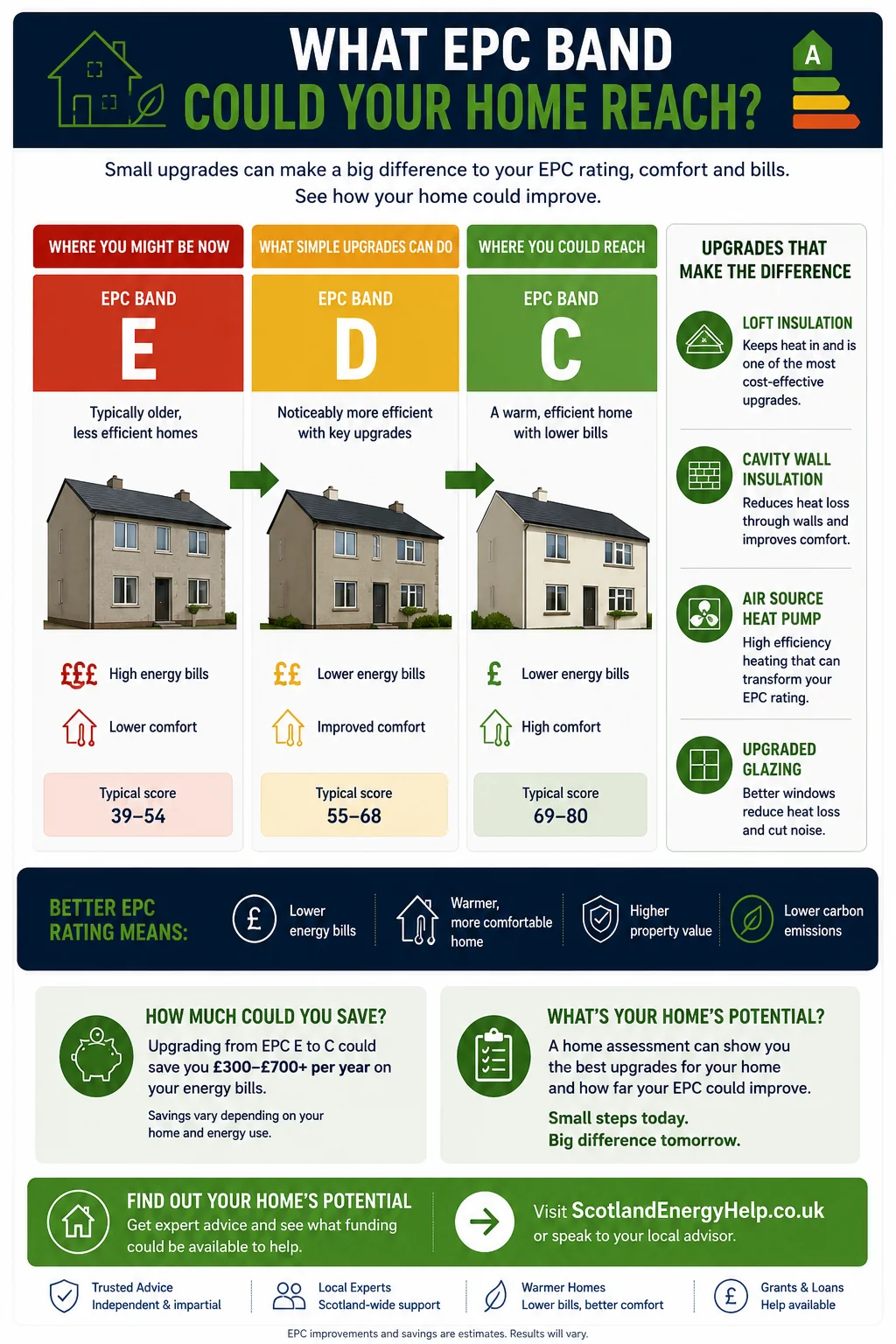
Ex-council homes are often better positioned on EPC than stone-built or tenement properties — many already sit at band D or C with cavity fill and loft insulation in place. The proposed 2033 owner-occupier standard is achievable with relatively modest upgrades.
The main variable is heating. An aging boiler or storage heaters typically drag the rating down. A heating system upgrade is often the final step from band D to band C.
The real cost of heating an uninsulated home
An uninsulated home can waste £500–£1,000+ every year through lost heat. Poor loft insulation, cold walls and old windows don't just affect comfort — they quietly drain money every winter. Grants and interest-free loans exist to stop that waste.

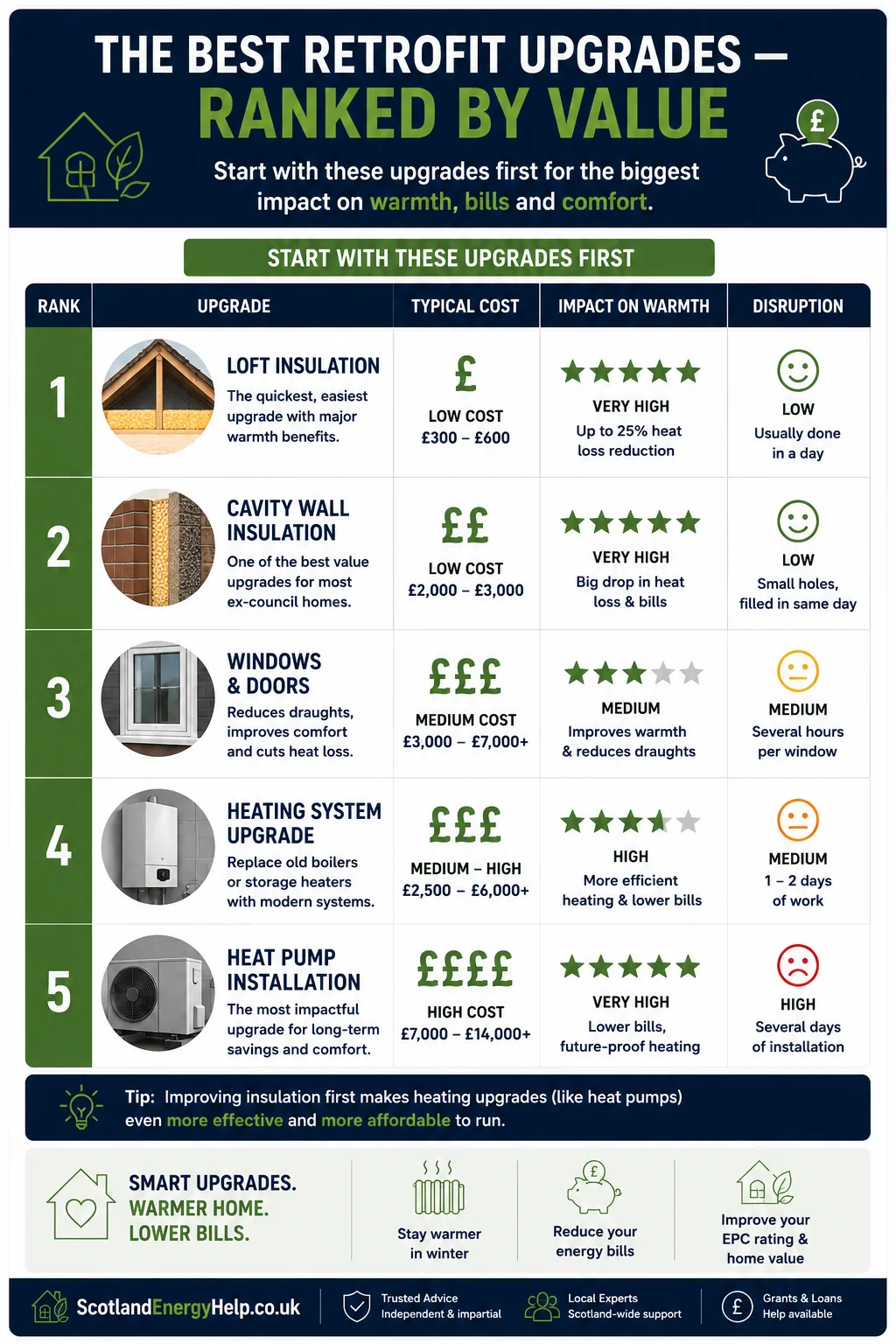
Which upgrades deliver the best value first
For most ex-council homes, the best-value order is loft insulation first, cavity wall insulation second, then windows and doors, then heating system upgrades. Heat pumps can be transformative, but usually make most sense after the fabric has been improved.
Practical steps for ex-council home owners
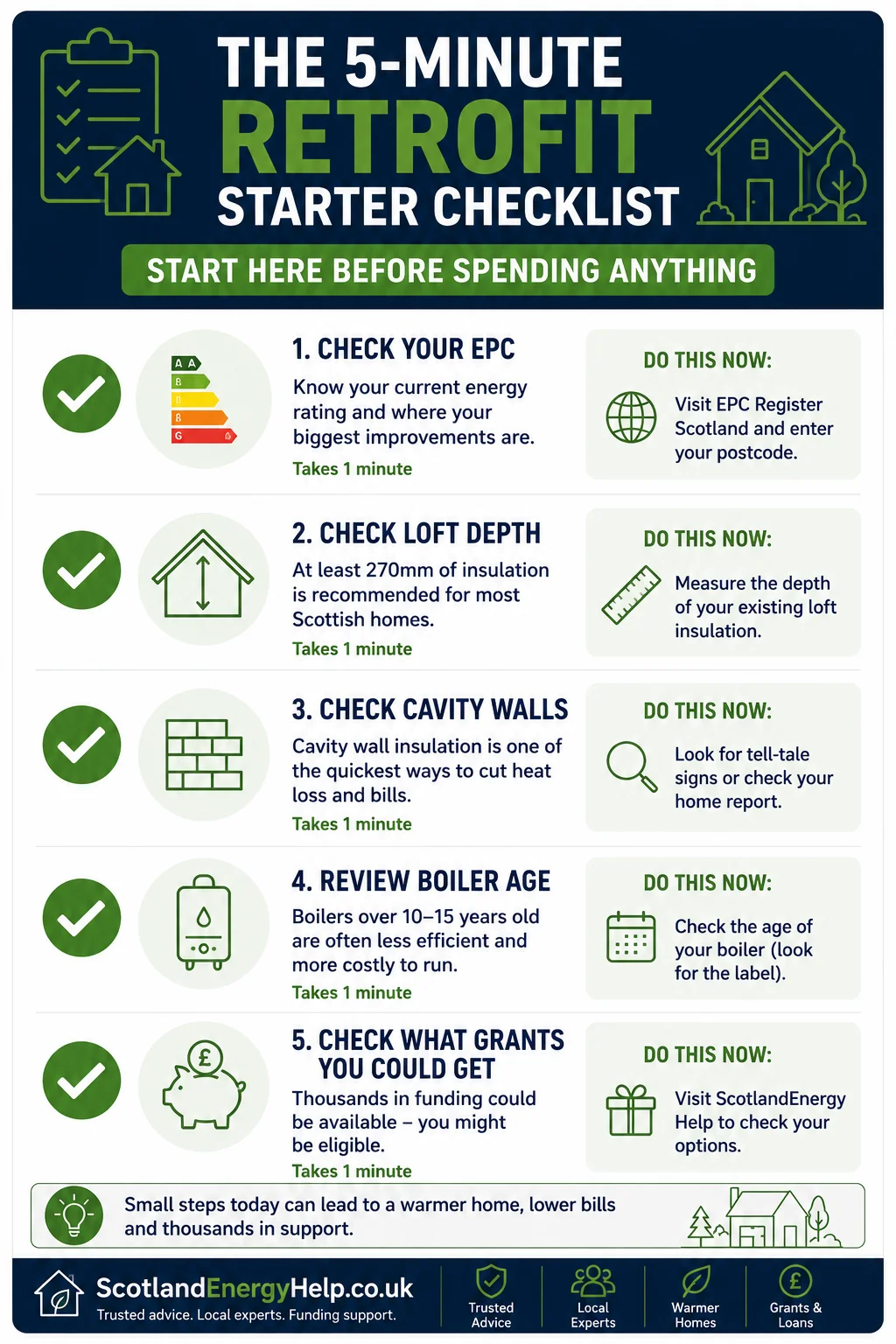
Get a current EPC if yours is over five years old. Identify your construction type — an EPC assessor or surveyor can confirm cavity walls or system-built type.
Check cavity and loft insulation status and prioritise both — they are low-cost, high-impact.
Contact Home Energy Scotland (free) and check ECO4 eligibility based on benefits in the household.
Ask your council about area-based schemes — collective delivery is usually cheaper than acting alone.
Frequently asked questions
How do I find out my construction type?+
Check your title deeds, ask your local council, or get a current EPC from an assessor familiar with non-traditional construction. Home Energy Scotland advisers can also often identify the system from your postcode.
My cavity walls were filled in the 1980s — should I worry?+
Possibly. Older cavity fill can settle or degrade. If your home feels colder than expected, commission a thermal imaging survey to identify voids or cold bridges before adding more measures.
Can I get a heat pump in an ex-council home?+
Yes, where insulation is adequate. Many ex-council homes with cavity fill and good loft insulation are well-suited. HES grants of up to £7,500 apply.
What if my home is non-standard construction?+
Funding is still available, but you need an installer experienced with your specific system (no-fines, Airey, Reema, steel-frame). Always confirm experience before signing.
Should I wait for an area-based scheme?+
If your council has a forthcoming programme for your estate, waiting is usually more cost-effective than acting individually. Ask your council energy team.
What does proper insulation actually feel like?+
A warmer, more even home with fewer draughts, less condensation and lower bills. The biggest day-to-day difference is usually comfort rather than just the EPC score.
Get this as a branded PDF
Save it, print it, share it with your contractor.