
Why Glasgow tenements are hard to heat
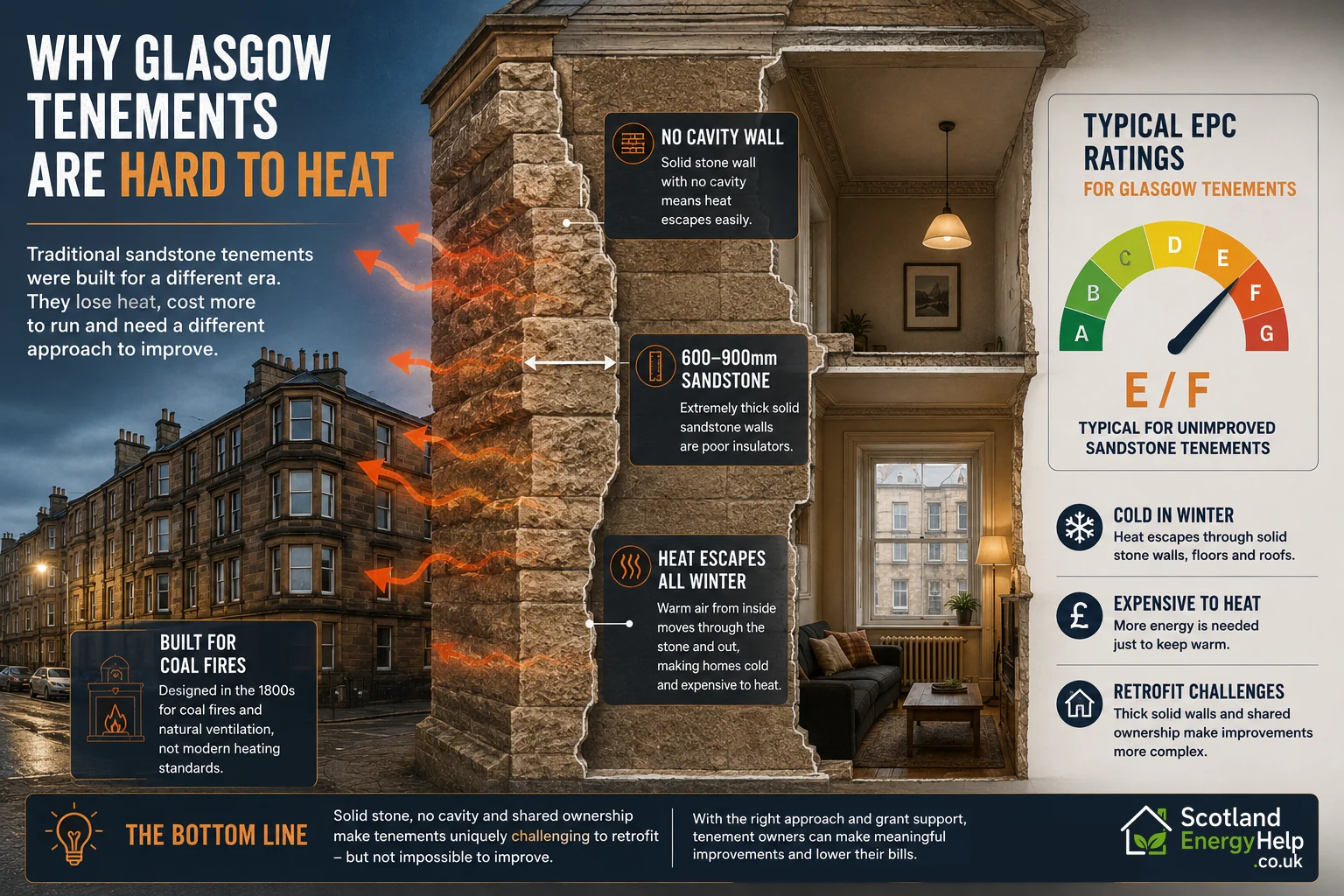
Glasgow's traditional tenements were built between roughly 1860 and 1910 from solid sandstone — typically 600–900mm thick, with no cavity. Designed in the 1800s for coal fires and natural ventilation, they lose heat through the walls, floors, roofs and chimneys.
The result: most uninsulated tenement flats sit at EPC band E or F, are cold in winter and expensive to heat. Thick solid walls and shared ownership make improvements more complex — but not impossible.
Typical EPC ratings in Glasgow tenements
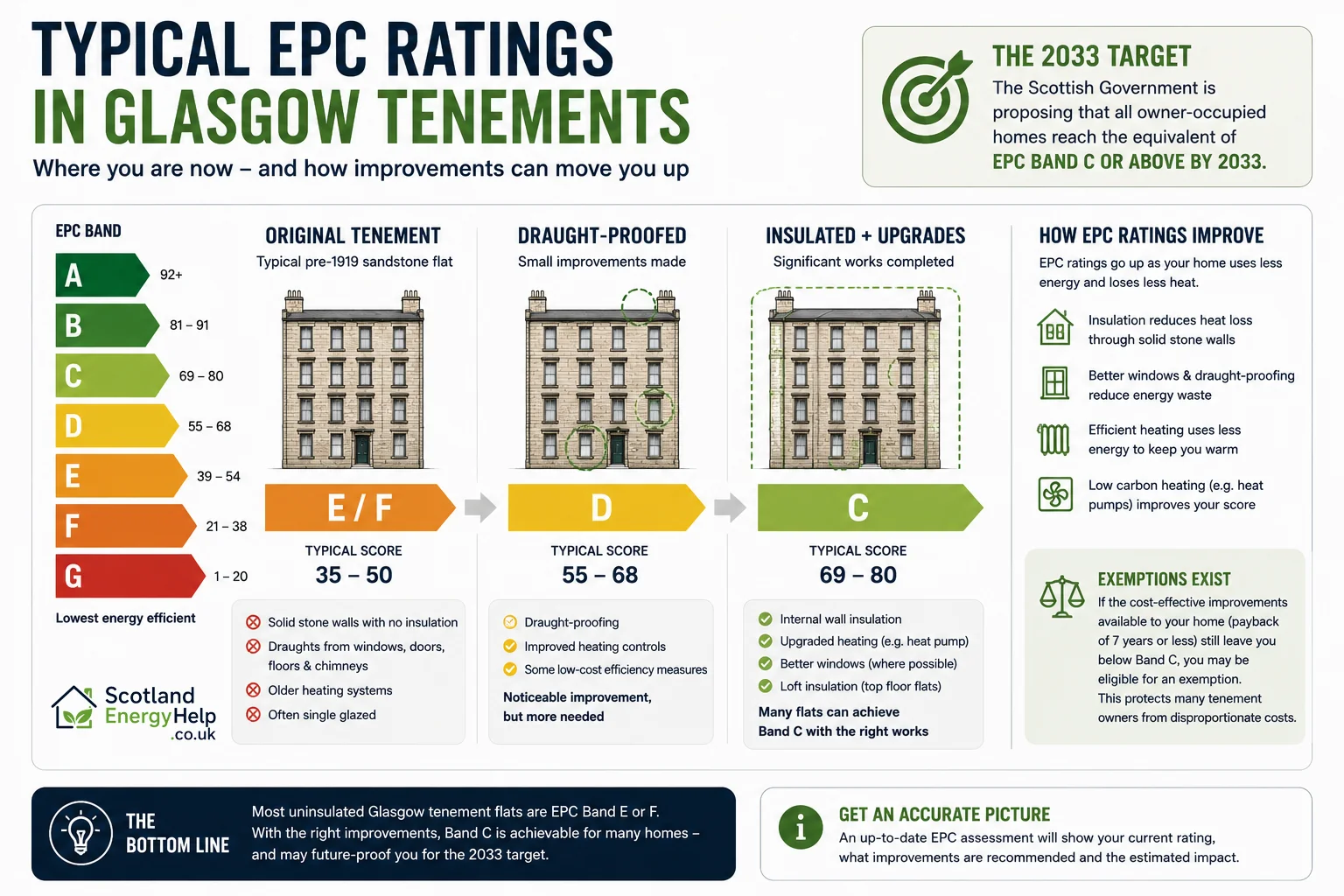
An unimproved pre-1919 sandstone flat typically scores EPC E or F (35–50). Draught-proofing and small low-cost measures lift that to band D (55–68). Significant works — internal wall insulation, better windows, loft insulation for top floors and an upgraded heating system — can take many flats to band C (69–80).
The Scottish Government has proposed that all owner-occupied homes reach the equivalent of EPC band C by 2033. Cost-effective exemptions exist where the available improvements (with a payback of 7 years or less) still leave you below band C.
What improvements actually work
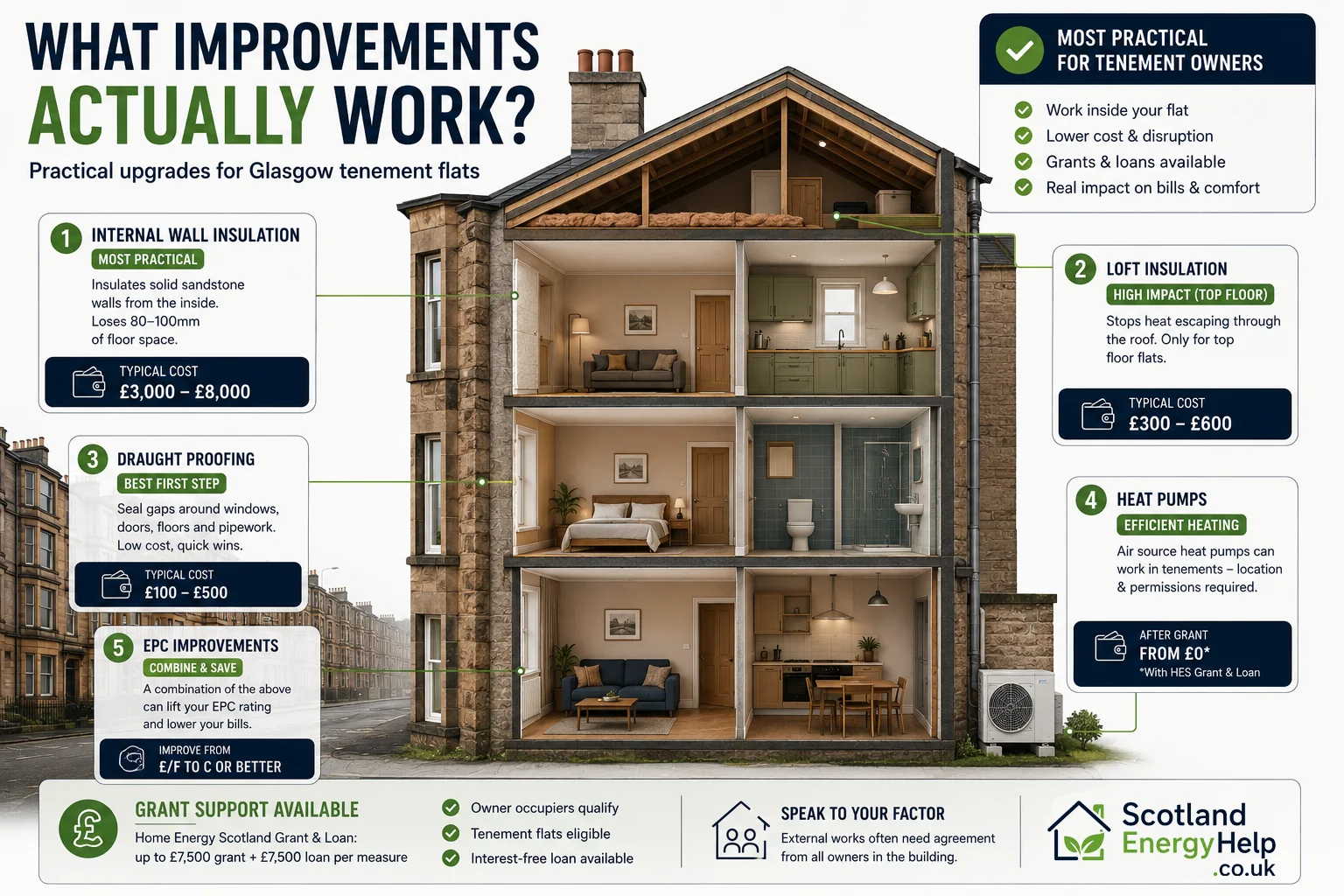
The most practical upgrades for tenement owners are the ones you can do inside your own flat: internal wall insulation (most practical, £3,000–£8,000), loft insulation for top-floor flats (£300–£600), draught-proofing (£100–£500) and — where suitable — an air source heat pump.
Combine these and many flats can move from EPC E/F to C or better, with lower bills, less disruption and grant support available.
The recommended retrofit sequence
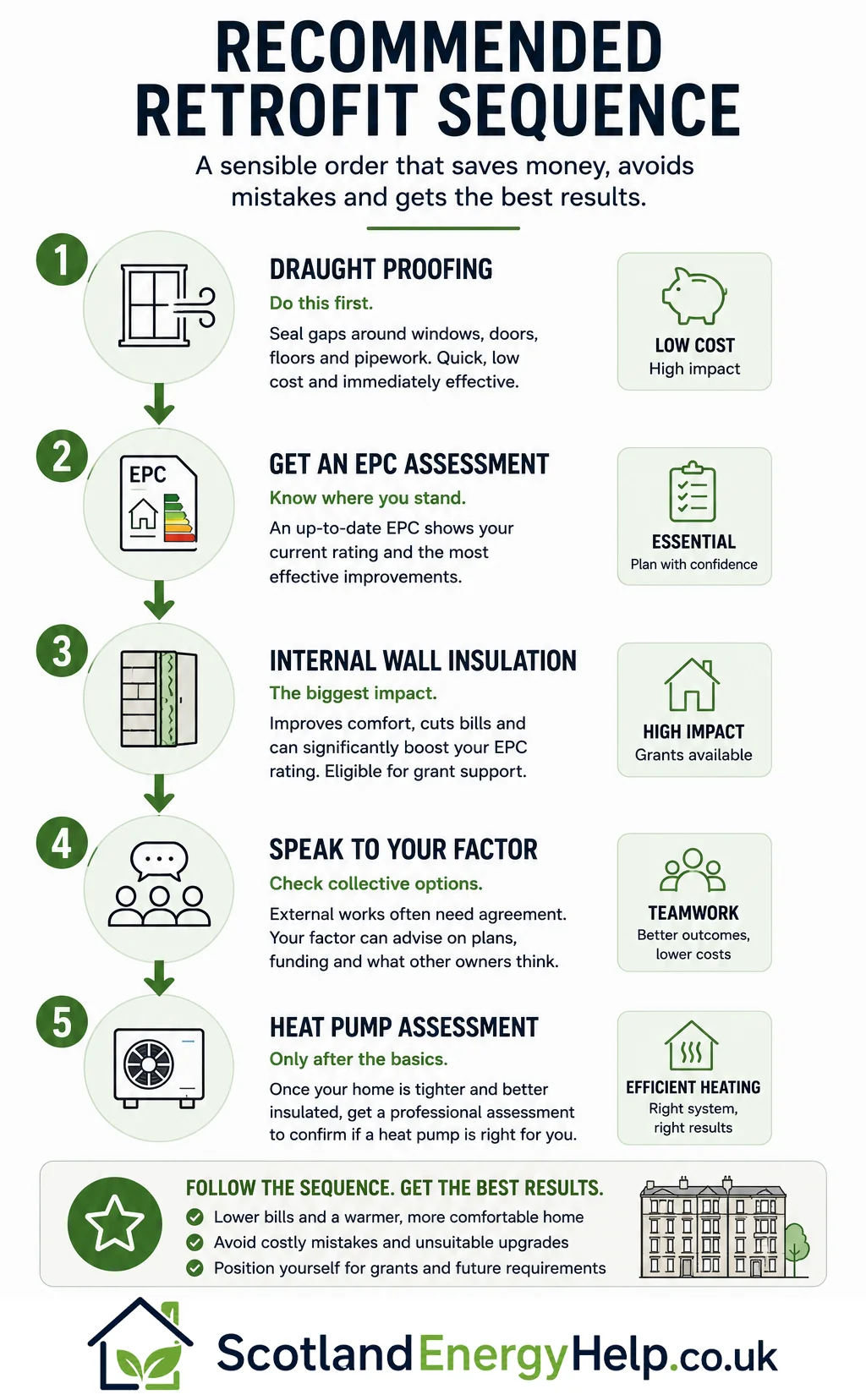
Order matters. 1. Draught-proof first — quick, low cost, immediately effective. 2. Get an up-to-date EPC assessment so you know where you stand. 3. Internal wall insulation — the biggest single impact and grant-eligible. 4. Speak to your factor about collective options for any external works. 5. Only after the basics, get a heat pump assessment from an MCS-certified installer.
Following the sequence saves money, avoids costly mistakes and positions you for grants and future requirements.
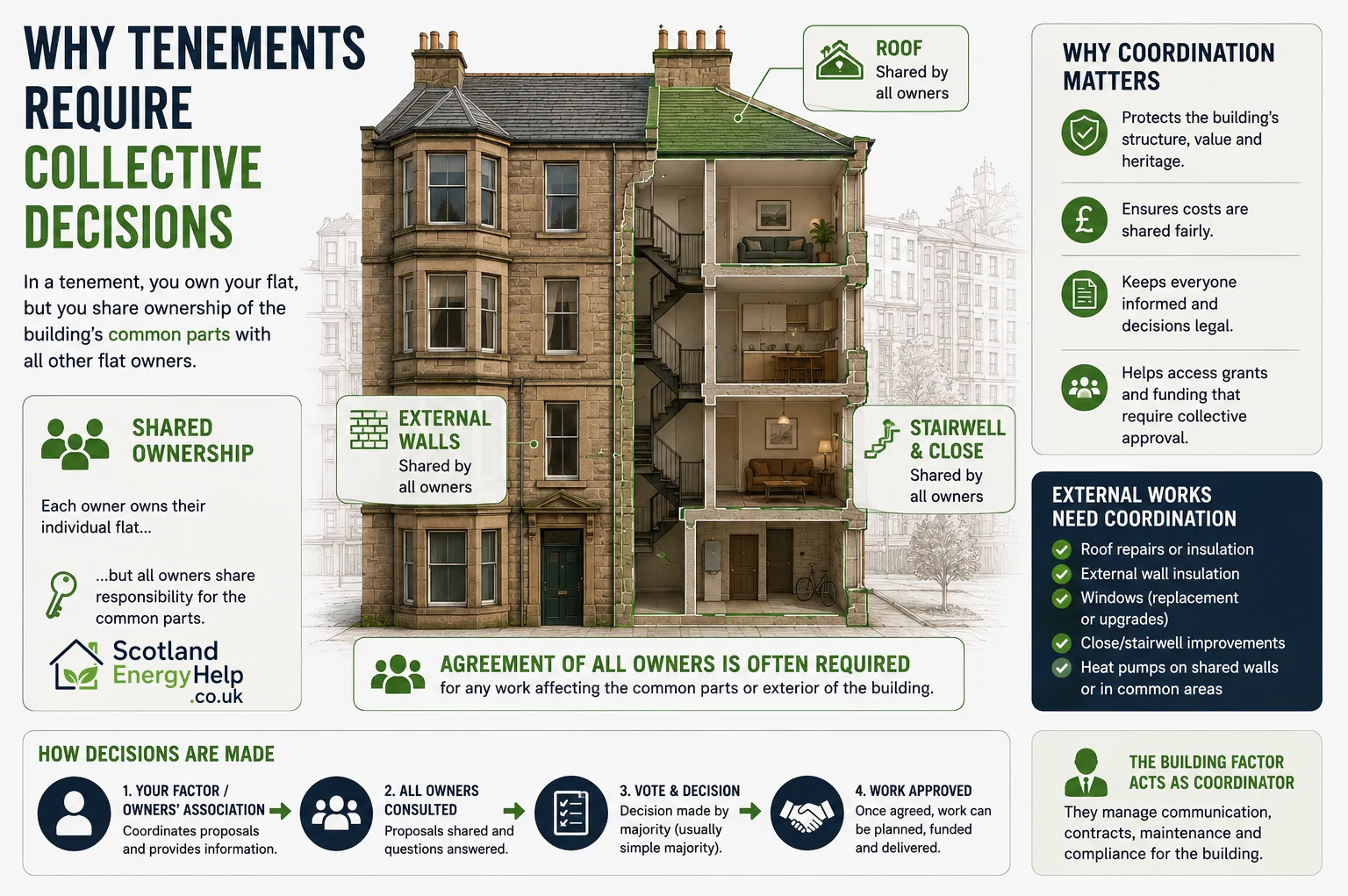
Why tenements require collective decisions
In a tenement you own your flat, but you share ownership of the building's common parts — roof, external walls, stairwell and close — with all other flat owners. Agreement of all owners is often required for any work affecting the common parts or exterior.
Decisions are usually coordinated by your factor or owners' association: proposals are shared, owners consulted, a vote taken (typically simple majority) and work then approved. This protects the building, ensures costs are shared fairly and unlocks grants that require collective approval.
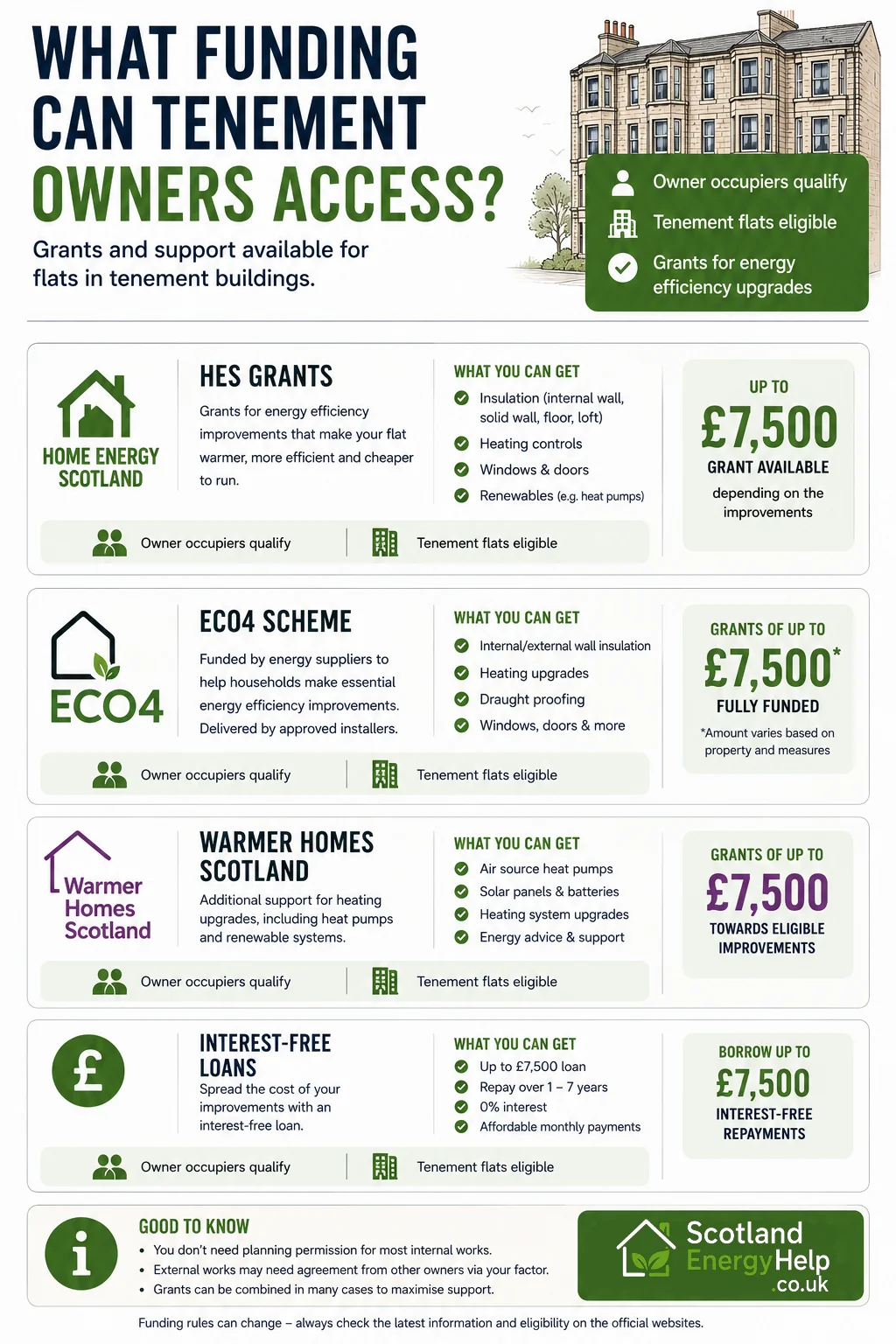
What funding can tenement owners access?
Owner-occupiers in tenement flats are eligible for the main Scottish schemes. Home Energy Scotland: up to £7,500 grant for insulation, heating controls, windows, doors and renewables. ECO4: up to £7,500 fully funded for insulation and heating, depending on property and measures. Warmer Homes Scotland: up to £7,500 towards heat pumps, solar and heating system upgrades.
On top of grants, an interest-free HES loan of up to £7,500 lets you spread the cost over 1–7 years. In many cases grants can be combined to maximise support. Funding rules change — always verify on the official scheme websites before committing.
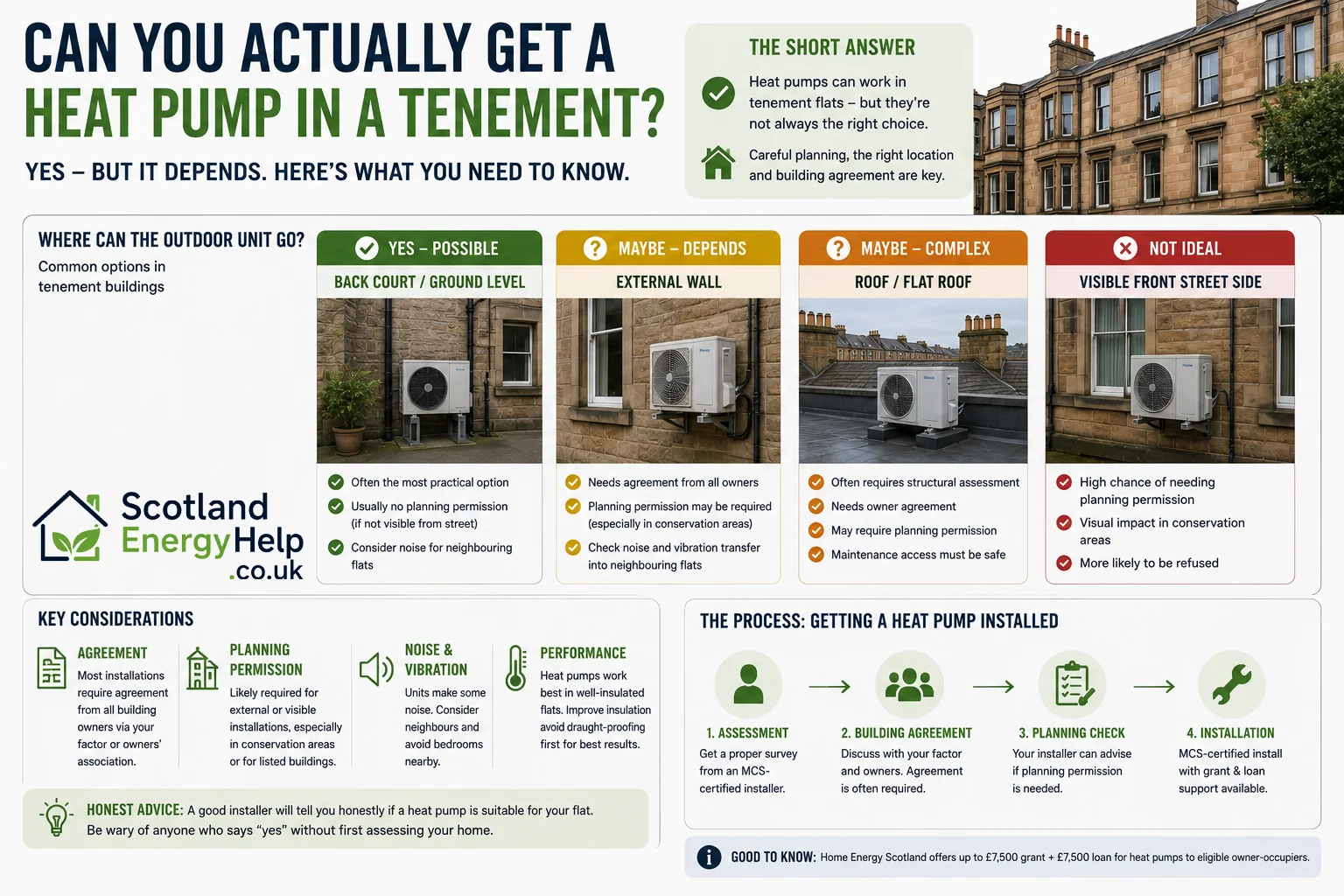
Can you actually get a heat pump in a tenement?
Yes — but it depends. Heat pumps can work in tenement flats with careful planning, the right outdoor unit location and building agreement. The most practical location is usually back court or ground level (often no planning permission, if not visible from the street). External walls and flat roofs are possible but more complex. Visible front-street installations are rarely approved, especially in conservation areas.
The process: 1. Assessment by an MCS-certified installer. 2. Building agreement via your factor and co-owners. 3. Planning check where required. 4. MCS-certified installation with HES grant and loan support. A good installer will tell you honestly whether your flat is suitable — be wary of anyone who says yes without surveying first.
Frequently asked questions
Can I install a heat pump in a tenement flat?+
Yes, with caveats. Air source units need an external location with permission from co-owners. Many top-flat owners install successfully; ground-floor flats face more constraints.
Get this as a branded PDF
Save it, print it, share it with your contractor.